
• Skip to main content
  • Skip to primary sidebar
Tiktok
Work With Us
Work With Us
The Humble Penny
Menu
  • Home
  • Shop
  • Books
    • THE WEALTH HABIT
    • Financial Joy
  • Courses
    • One Grand Plus
    • Take Control Bootcamp Planner
    • Make Money Monthly With Affiliate Marketing
    • Budget For Life
    • Super Simple Investing
    • FIRE Superpower
    • Rocket Your Income
    • Value Bundle
  • Coaching
    • 121 Coaching
    • Financial Freedom Coaching
    • Financial Joy Academy (FJA) Membership
    • Architect Programme
    • Financial Joy Academy (FJA) VIP
  • Workshops
  • About
    • About Us
    • Contact
  • Blog
  • Free
    • Free Courses
    • Start a Blog Tutorial
    • Best Resources
    • Books We Love
Order Now
The Humble Penny
  • Home
  • Shop
  • Books
    • THE WEALTH HABIT
    • Financial Joy
  • Courses
    • One Grand Plus
    • Take Control Bootcamp Planner
    • Make Money Monthly With Affiliate Marketing
    • Budget For Life
    • Super Simple Investing
    • FIRE Superpower
    • Rocket Your Income
    • Value Bundle
  • Coaching
    • 121 Coaching
    • Financial Freedom Coaching
    • Financial Joy Academy (FJA) Membership
    • Architect Programme
    • Financial Joy Academy (FJA) VIP
  • Workshops
  • About
    • About Us
    • Contact
  • Blog
  • Free
    • Free Courses
    • Start a Blog Tutorial
    • Best Resources
    • Books We Love
  • Home
  • Shop
  • Books
    • THE WEALTH HABIT
    • Financial Joy
  • Courses
    • One Grand Plus
    • Take Control Bootcamp Planner
    • Make Money Monthly With Affiliate Marketing
    • Budget For Life
    • Super Simple Investing
    • FIRE Superpower
    • Rocket Your Income
    • Value Bundle
  • Coaching
    • 121 Coaching
    • Financial Freedom Coaching
    • Financial Joy Academy (FJA) Membership
    • Architect Programme
    • Financial Joy Academy (FJA) VIP
  • Workshops
  • About
    • About Us
    • Contact
  • Blog
  • Free
    • Free Courses
    • Start a Blog Tutorial
    • Best Resources
    • Books We Love
  • Home
  • Shop
  • Books
    • THE WEALTH HABIT
    • Financial Joy
  • Courses
    • One Grand Plus
    • Take Control Bootcamp Planner
    • Make Money Monthly With Affiliate Marketing
    • Budget For Life
    • Super Simple Investing
    • FIRE Superpower
    • Rocket Your Income
    • Value Bundle
  • Coaching
    • 121 Coaching
    • Financial Freedom Coaching
    • Financial Joy Academy (FJA) Membership
    • Architect Programme
    • Financial Joy Academy (FJA) VIP
  • Workshops
  • About
    • About Us
    • Contact
  • Blog
  • Free
    • Free Courses
    • Start a Blog Tutorial
    • Best Resources
    • Books We Love
Pre-order Now

I’m 51. Is It Too Late to Have a Comfortable Retirement?

I’m 51. Is It Too Late to Have a Comfortable Retirement?

May 7, 2026 by The Humble Penny 0 Comments

If you’re in your 50s and feeling unprepared for retirement, I want to start with this simple truth: it is not too late.

It may feel late and uncomfortable or even frightening when you start looking at the numbers.

But late is not the same thing as impossible.

I was asked a question by someone who said,

I’m 51 years old and don’t feel financially prepared for retirement. What should I prioritise right now?

It’s such an important question because many people are carrying this quietly. They feel really underprepared.

They’ve worked hard, life has happened, and suddenly retirement no longer feels like a distant concept. It feels close.

The good news is that retirement planning does not begin with panic. It begins with clarity.

What matters now is not beating yourself up over the past; instead, it's about taking the right steps from this point forward.

There is still time to make meaningful progress, especially if you become intentional about what retirement actually means for you and what actions you’re willing to take.
retire comfortably

Table of Contents

Toggle
  • Start Planning to Retire Comfortably
  • 🌱 Step 1: Be honest about why you are where you are
  • 🧭 Step 2: Define what retirement means to you personally
  • 📍 Step 3: Decide where you want to retire
  • 🧮 Step 4: Work out how much you realistically need
  • 📉 Step 5: Calculate the gap
  • ⚙️ Step 6: Decide how you’re going to fill the gap
  • 📚 Step 7: Use good resources and keep learning
  • 💛 Why 51 is not too late
  • Frequently Asked Questions
  • Is 51 too late to start retirement planning?
  • How much money do I need to retire comfortably?
  • What if I am far behind on retirement savings?
  • Should I still invest if retirement is only 10 to 15 years away?
  • Does where I retire really make that much difference?
  • What if I do not want to stop working completely?

Start Planning to Retire Comfortably

If I were in this situation, here are a few steps I'd take:

🌱 Step 1: Be honest about why you are where you are

The first step is reflection, but not self-blame.

This matters because many people avoid retirement planning altogether.

They bury their heads in the sand because the topic carries shame, anxiety, regret, or uncertainty.

But if you don’t face where you are, it becomes very difficult to build a plan for where you want to go.

Ask yourself honestly:

  • Why do I feel unprepared for retirement?
  • What has contributed to my current financial position?
  • What patterns, events, or setbacks have shaped this?

The answer might not be carelessness at all.

Perhaps you immigrated and had to start over.

Maybe you experienced divorce, health issues, a career setback, or time out of the workforce to raise children.

Perhaps your income was decent, but lifestyle creep slowly ate away at your ability to save.

Maybe you were simply surviving, and retirement was never the immediate priority.

Whatever the reason, write it down.

If you have a partner, talk about it together.

These conversations can be uncomfortable, but they create the foundation for everything that follows.

You need a clear-eyed view of your story so you can move forward with intention instead of fear.

Recommended: Before I forget to mention it, if you need tailored 121 well with your Retirement Planning, book a 121 Power Hour with me. I'll share more later.

🧭 Step 2: Define what retirement means to you personally

One of the biggest mistakes in retirement planning is assuming retirement only has one shape.

For some people, retirement means stopping work completely at 65 and spending their time relaxing, travelling, and enjoying family.

For others, retirement is not about doing nothing. It is about freedom.

Freedom to choose work they enjoy, freedom to work part-time, freedom to pursue purpose without pressure.

That distinction matters.

If your idea of retirement is unclear, your plan will be unclear too.

Think about questions like these:

  • Do you want to stop working completely or reduce your hours?
  • Do you want to travel?
  • Do you want a quiet life close to family?
  • Do you still want purpose-driven work, perhaps on your own terms?
  • Do you want to remain in the same country or split your time between two places?

I recently saw an example of a couple in America who realised the traditional path was not for them.

They sold everything, retired at 55, converted an RV into a home, and chose a travel-focused life instead.

That was their version of retirement.

We've identified 8 types of retirement that people end up having realistically.

Which one you end up with will depend on what you do from now on.
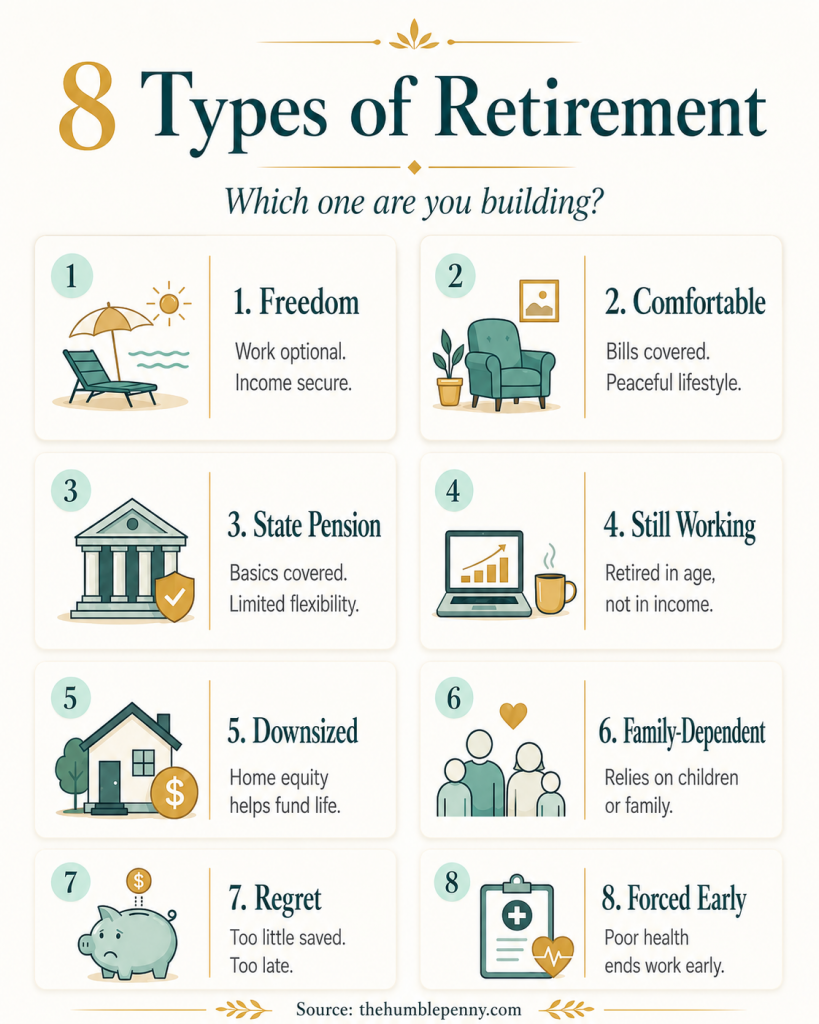
For Mary and me, our version has always been to aim for the “freedom” type of retirement but not one that we enjoy some day.

We paid off our mortgage in seven years, invested aggressively across different assets, and worked towards a lifestyle that blends freedom, flexibility, and enjoyment now, not just later.

We often describe it as creating a life of financial joy, where you are preparing for the future without postponing all happiness until retirement.

Your retirement does not need to look like anybody else’s.

But it does need to be clear enough that you can cost it and work towards it.

comfortable retirement

Recommended: 40+ and Little Saved for Retirement?

📍 Step 3: Decide where you want to retire

Where you retire has a huge impact on how much retirement will cost.

This is one of the most overlooked parts of retirement planning.

People often jump straight to “How much money do I need?” without first asking, “Where exactly do I plan to live?” That question changes everything.

Retiring in the UK, the US, Canada, Australia, or many parts of Europe is generally far more expensive than retiring in lower-cost regions of the world.

Housing costs, food costs, healthcare, transport, and general lifestyle expenses all feed into your retirement number.

Housing is especially important.

If you are still renting in retirement, your costs may remain vulnerable to rising rents and inflation.

This is a major issue, particularly in high-cost cities such as London.

If you own your home outright, your retirement income may stretch much further.

If you plan to downsize or relocate to a cheaper area, that can change your numbers dramatically.

Also, think beyond property. Consider:

  • The cost and quality of food
  • Access to healthcare
  • Your support network and family connections
  • Climate and lifestyle preferences
  • Whether your day-to-day living costs will rise or fall there

Some people choose to retire abroad because their money goes further.

Others want to stay close to family even if it costs more.

Neither option is wrong; the key is understanding the trade-off.

For us personally, good weather, lower cost of living, proximity to family/community and access to good health care options, ease of return to the UK and access to quality organic food are important.

comfortable retirement
Anywhere we can have organic fruits like this in their original form is a win 🙂

Good food is critical for living life well, especially as we age.

This simple, affordable, and delicious meal is one I'd love to have more of in retirement. Love the variety.
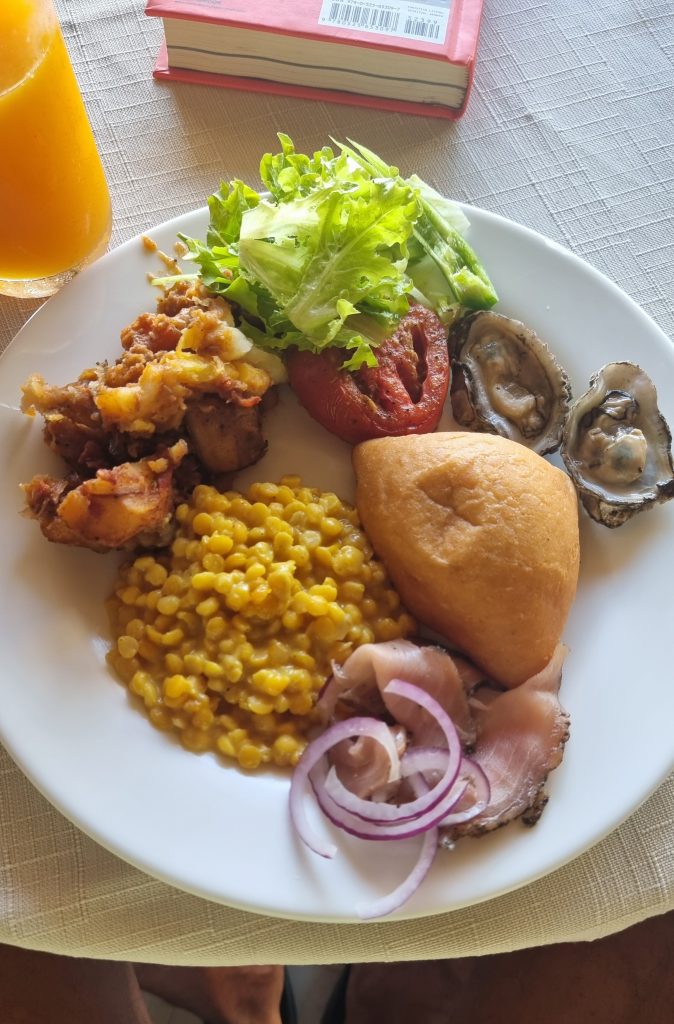
Food doesn't need to be expensive, but sadly, it is in the West. This is a lovely meal we enjoyed in East Africa.

🧮 Step 4: Work out how much you realistically need

Once you know what retirement looks like and where you want to live, the next step is to estimate your number.

A simple way to begin is this:

  1. Estimate how much you would spend each month in retirement.
  2. Multiply that by 12 to get your annual spending.
  3. Multiply that annual number by 25.

For example, if you expect to spend £2,000 per month, that is £24,000 per year.

Then:

£24,000 x 25 = £600,000

That gives you a rough retirement target, especially if you plan to retire in the US.

Another version of the same calculation is to divide your annual spending by a safe withdrawal rate. Using 4%, that would look like this:

£24,000 ÷ 0.04 = £600,000

For UK planning, a more cautious safe withdrawal rate of 3.5% rather than 4% is needed, according to research, but it would increase the amount needed.

In the above example, it would be £24,000 ÷ 0.035 = £685,714.

This is not a perfect financial planning model, but it is a useful starting point.

It gives you a tangible figure to aim for instead of a vague sense of dread.

There are, of course, many factors that affect this number:

  • Whether you are mortgage-free, still have a mortgage or you rent
  • Whether you are single or planning as a couple
  • Whether you still support children or grandchildren
  • How much travel you want to do
  • What lifestyle you want in retirement

One more thing to bear in mind is the state pension.

If you are in your early 50s, the state pension may still form part of your retirement picture.

But you need to understand when you’re eligible, how much you’re likely to receive, and whether that amount will continue rising depending on where you live.

In some cases, moving abroad can affect how your state pension increases over time.

That is why location and pension planning need to be considered together, not separately.

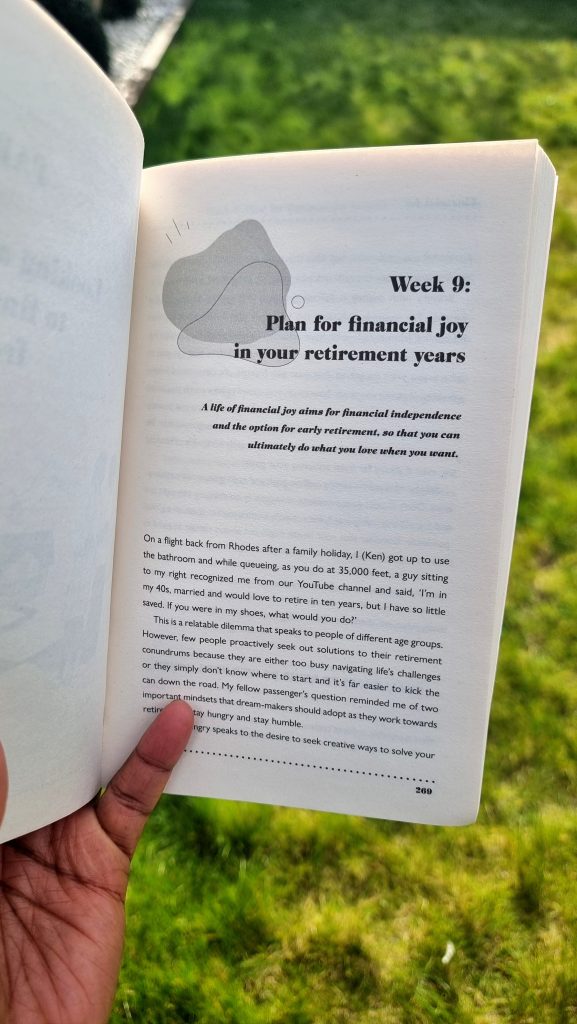
I highly recommend reading week 9 of Financial Joy, as it goes deep into retirement planning as a starting point.
comfortable retirement


📉 Step 5: Calculate the gap

Once you know roughly how much you need, compare it to what you already have.

This is where things become very real, but also very useful.

Let’s say your target is £600,000, and currently you have £100,000 across your pension, ISAs (i.e. tax-free accounts), investments, and other retirement assets.

Your gap is £500,000.

That gap is not there to make you feel bad; instead, it is there to help you plan.

Without knowing the gap, you cannot begin to think strategically about how to close it.

For some people, the gap may be smaller because they have paid off their home.

For others, it may be larger because they are still renting or have had limited opportunity to invest.

Again, this is why honesty matters so much in step one. You need facts, not assumptions.

At this stage, pull together everything you can:

  • Private pensions
  • Workplace pensions
  • Stocks and shares ISAs
  • Savings
  • Property equity
  • Business assets
  • Any other investments

Then compare that total against your target retirement number.

⚙️ Step 6: Decide how you’re going to fill the gap

This is the strategy stage.

Once you know your gap, you can begin building an approach around your time frame, your risk tolerance, your income, and your goals.

There is no one-size-fits-all plan here, but there are a number of paths people often combine.

These may include:

  • Investing in the stock market in a disciplined, tax-efficient way
  • Property investing, where appropriate
  • Building or growing a business that could eventually be sold or generate income
  • Downsizing to release equity from your home
  • Geo-arbitrage, meaning relocating somewhere with lower living costs
  • Working part-time in a semi-retired lifestyle
  • Increasing income now by taking on extra work specifically to invest more

That last point is particularly important if retirement is 5 to 15 years away.

If you can generate an extra £500 (650) or £1,000 ($1,300) per month and direct that money intentionally into investments, it can make a real difference over time.

For some people, that may mean finding another job, creating a side income stream, or cutting unnecessary spending to free up more cash for investing.

The key is to stop thinking vaguely and start thinking structurally.

Ask yourself:

  • What is the most realistic way for me to increase my assets?
  • What can I automate?
  • Which habits need to change?
  • What timeline am I working with?
  • Do I need expert help to build a tailored plan?

For many people in their 50s, this stage is also emotional.

There is often an urgent desire to enjoy life now, not just accumulate for later.

And rightly so.

We all know stories of people who worked and waited, only to never really enjoy the retirement they imagined. That is why retirement planning is not purely mathematical. It is also about life design.

You may choose to create a version of retirement that starts earlier, but in a lighter form.

Less work, more freedom, lower costs, and a more intentional lifestyle.

That can be just as valuable as aiming for a traditional full-stop retirement at a fixed age.

📚 Step 7: Use good resources and keep learning

You do not need to figure all of this out in one sitting, and you do not need to do it blindly.

Retirement planning becomes much less intimidating when you break it into small, manageable steps and use trusted resources to guide you.

If you prefer a DIY approach, spend time learning the fundamentals of:

  • How much retirement might cost for your lifestyle
  • How pensions and investing work
  • How to build tax-efficient wealth
  • How to estimate income from your assets
  • What lifestyle changes could improve your long-term options

And if your situation is more complex, there is real value in getting personalised guidance.

A retirement plan is always stronger when it reflects your actual life, not a generic spreadsheet from the internet.

If you need tailored 121 well with your Retirement Planning, book a 121 Power Hour with me.

The most important thing is this: do not stay stuck in avoidance.

Even one focused afternoon of reflection, number-crunching, and decision-making can move you from fear to direction.

💛 Why 51 is not too late

I want to end on an encouraging note because this conversation can feel heavy.

If you are 51, or in your 50s generally, that season of life should not only be marked by financial anxiety.

It should also be recognised for what it is: a remarkable milestone.

You have lived half a century. That is something to respect.

Yes, the cost of living is high, and the world feels uncertain.

And, yes, retirement planning can seem more difficult now than it did for previous generations.

But there is another side to that story, too.

There is more access to information, more flexibility in how people live and work, more global options, and more opportunities to design life differently.

You do not need perfection from this point; you need progress and honesty about where you are, clarity about where you want to go, and courage to start taking the next step.

In my personal view, this is how comfortable intentional retirement begins, and it doesn't need to start when you're 65.

Frequently Asked Questions

Here are answers to additional frequently asked questions:

Is 51 too late to start retirement planning?

No. Starting at 51 is later than many people would like, but it is absolutely not too late.

What matters most is getting clear on your retirement goals, understanding your current financial position, and taking focused action to close the gap.

How much money do I need to retire comfortably?

A simple starting point is to estimate your annual retirement spending and multiply it by 25.

For example, if you need £24,000 per year, you might aim for around £600,000.

This is only a rough guide, and your actual number will depend on where you live, housing costs, lifestyle, and whether you expect any pension income.

Recommended guide: How Much Do I Need to Retire Comfortably? 

I also recommend taking a look at the Retirement Living Standards.

What if I am far behind on retirement savings?

First, work out the gap between what you need and what you currently have.

Then create a realistic plan to close that gap through investing, increasing income, downsizing, relocating, working part-time for longer, or combining several approaches.

Feeling behind is not the same as being out of options.

Should I still invest if retirement is only 10 to 15 years away?

For many people, yes.

If retirement is still several years away, investing may still play an important role in growing your assets.

The exact approach depends on your risk tolerance, timeline, and wider finances, but many people in their 50s still use investing as part of their retirement planning strategy.

Does where I retire really make that much difference?

Yes, it can make a huge difference.

Housing, food, healthcare, transport, and taxes vary significantly by location.

A retirement that feels expensive in one country may feel very manageable in another. 

This is why a lot of people move to countries in Asia and Africa, for example.

Deciding where you want to live is one of the most important retirement planning decisions you can make.

What if I do not want to stop working completely?

That is perfectly valid.

Retirement does not have to mean a complete end to work.

Many people prefer a semi-retired lifestyle with part-time work, flexible projects, or purpose-driven activity.

In fact, that approach can reduce financial pressure and make the transition into retirement much smoother. Plus, it actually keeps you alive!

Wherever you are starting from, begin there.

Reflect honestly, define your version of retirement, run the numbers, find the gap, build the plan and keep going.

Comfortable retirement is not only for people who got everything right in their 20s or 30s. It is also for people who are willing to get intentional now.

Here are more resources to help you plan for a comfortable retirement:

  • Book a 121 Power Hour with me for retirement coaching with me
  • Read The Wealth Habit book: Small Changes Will Make You Rich
  • The Financial Joy book: Banish Debt, Grow Your Money and Unlock Financial Freedom in 10 Weeks
  • Why Do You Have The Audacity to Dream Big?
  • How to Make Work Optional In Every Decade of Your Life

Here is a video version of this blog post to watch and share with others who want a comfortable retirement:

As always, in all things, be thankful and seek joy.

Why Do You Have The Audacity To Dream Big?

April 20, 2026 by The Humble Penny 0 Comments

“It's the audacity for me. Why do you have the audacity to think you can do it?”

A friend asked me this question during a phone call to celebrate us becoming Sunday Times Bestsellers for a second time with our new book, The Wealth Habit.

As soon as she asked the question, I smiled because I recognised where it was coming from.

When you look up the meaning of the word ‘audacity', it means a willingness to take bold risks.

As children, we were born to be creative and take risks, but somewhere along our journeys to adulthood, we lose a part of our creative identity.

When I reflected on whether to write this blog post, I realised that I've been on a journey of rediscovering my inner child and that I should write it because you may also be on that journey.

I'm at a stage of life now where I don't listen to people who tell me I can't do something.

That attitude or energy came from somewhere, and I'd like to explore that more deeply today.

Note, this post is a personal reflection.

I'm writing it as it comes to me, so hopefully, it speaks to you.

More importantly, I think you'll need audacity for the future we are entering.

Before I dive into the why I have the audacity, let's begin with some context.

Audacity to dream big
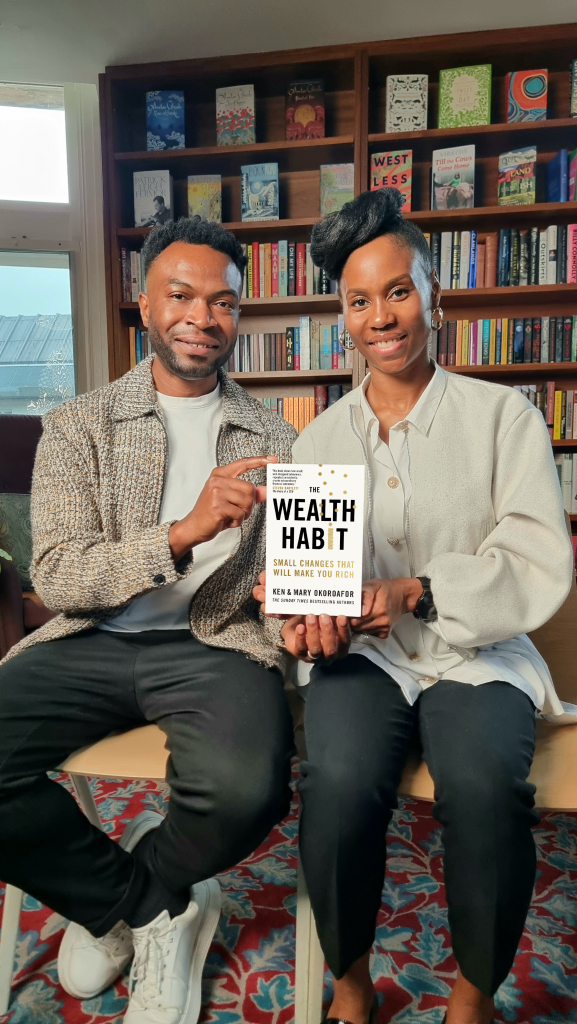
Celebrating The Wealth Habit becoming a Sunday Times Bestseller.

Table of Contents

Toggle
  • A Brief Look at Where It Began
  • Where Things Are Now
  • Why Do You Have The Audacity?
  • 1. No One Has a Monopoly On the Future
  • 2. The Power of 1% Changes
  • 3. Challenge + Deadline? Yes, Please.
  • 4. Never Settling
  • 5. Show Our Children What's Possible
  • 6. Take Others Along
  • 7. God Has a Design
  • 8. Supportive Family, Friends and Mentors
  • 9. Experimental Mindset
  • 10. T.H.I.N.K B.I.G
  • Conclusion

A Brief Look at Where It Began

The start of my life began in Nigeria, and we never lived in a home we actually owned.

We rented and moved a lot because my parents were always in search of work or opportunity.

We came from very humble beginnings, and the best hope I had as a teenager before the age of 14 was to go to school and see what happens.

At 14 in the late 90s, we emigrated to the UK, and our situation got comparatively worse.

With very little money, my parents worked 3 jobs each, we could barely even rent a place, and life felt good when we ended up renting a council flat in East London.

But deep down, the more I looked around this country, the more I saw what was possible for others. The question was, why wasn't it possible for us?

We had many battles to fight first: residency, new culture, lack of money, racism, fitting in, shame, etc.

But, even with these challenges, my parents gradually overcame the shame of leaving the life they'd built up to work as cleaners, washing dishes, stacking shelves, etc.

They didn't want anyone to know they did these jobs, but it is all they had or could get.

Writing about it now actually made me teary because they sacrificed so much because they believed their children would have a better future in the UK.

In addition to their low-paid jobs (where some bosses took advantage of them), they even started all kinds of small businesses.

Some made money, and some didn't.

All of this meant they had little to no time for us (and themselves) because they were always working from one job to another.

Where Things Are Now

I've had to fight my way up.

We all judge success or progress differently, so these may not be important to you, but it has meant a lot to me to achieve certain life milestones given where I began:

  • I passed my driving test first time. Life began for me here at 17 with my first car, a Fiat Punto.
  • Got into City, University of London, through clearing and achieved a First Class honours degree in BSc Economics & Accountancy.
  • Trained for 3 years with a top 10 accounting firm and passed the tough ACA exams first time and became a Chartered Accountant. A proud day.
  • Dreamt of going, applied and got in to do my MBA at the University of Cambridge, Judge Business School.
  • Worked in the investment business for 14 years and eventually became a CFO (a dream) from a trainee, across different companies.
  • Started and didn't succeed at various side hustles, learning a lot and kept trying.
  • Got married to Mary (a dream) and also became a present dad to our two sons (a life promotion).
  • Together, we achieved Financial Independence at 34, including being mortgage-free in 7 years. Financial destiny changed forever.
  • Started The Humble Penny to help others with their finances. Over 5 million people have been helped so far.
  • Started Financial Joy Academy to help Dream Makers take action to achieve financial freedom.
  • Became a Non-Executive Director, using my skills to help people in financially vulnerable circumstances.
  • Became a published author of 2x Sunday Times Bestselling books, Financial Joy and The Wealth Habit.
  • Won various awards, including ‘Entrepreneur Senior Leader of the Year', ‘Best Investing Book', etc
  • Happily married for 15 years and counting.

Nothing has been handed to me; I've had to dream of them and gradually make them happen. This isn't a brag, it's for context.

Back to our friend, she asked the question with this background of progress so far…

Why Do You Have The Audacity?

Here is what comes to mind as I reflected on this question and considered my personal journey:

1. No One Has a Monopoly On the Future

I still remember The Shard in London being built. During my train journeys to work, whenever we'd arrive at London Bridge, I'd look at this magnificent building taking shape.

It dawned on me that a lot of the London we see today began in people's imaginations.

They had to think of how to plan the city, design the roads, buildings, etc. 

Although most of London's land has been taken up, the future is like empty fertile ground waiting for us to build on it.

And you know the best part? No one has a monopoly on it.

You and I can make decisions today that have the power to change the direction of the future. 

This idea gets me very excited because it makes me wonder, if I could create a version of the future, what version would I create?

It makes me dream big even when others are afraid of the future.

2. The Power of 1% Changes

We cover this one extensively in chapter 2 of The Wealth Habit, “The 1% Rule: Tiny Adjustments, Massive Wealth”, and the neuroscience behind it.

Growing up, I was conditioned to think of success = big changes.

However, I've learned to appreciate the compounding power of 1% changes.

Whenever I think of a big goal, rather than get overwhelmed by it, I think to myself:

  • could I do 1% of it today?
  • what if I improved from yesterday by 1% today?
  • imagine if I did 1%, Mary did 1%, and a team member did 1%, we'd be way ahead.

This idea of getting 1% better started to help me see big goals as made up of small, easy 1% changes.

Take becoming a Sunday Times Bestseller. I came up with a series of 1% improvements:

  • write a blog post weekly
  • comment on LinkedIn daily
  • talk to a stranger about the book
  • ask someone in a comment if they've bought the book
  • make a YouTube video and give value to people, and mention the book, etc.

We easily had at least 200 combinations of these 1% improvements over the 2 months building up to the book launch and hundreds more in the months before that.

When you add up the compounding effect of these small changes, it makes an audacious goal more possible.

3. Challenge + Deadline? Yes, Please.

I've found that I perform best when I am working towards a deadline.

Parkinson's Law states that work expands to fill the time available for its completion. When I limit the time to achieve something, I make the outcome happen faster.

This is a simple mind trick, but it works. 

Want something to happen? Give it a deadline.

Most people run away from deadlines, but I run towards them.

4. Never Settling

We were invited to a podcast recently, and one of the questions we were asked was:

“What is one thing about your partner that still surprises you — good or bad?”

I asked my wife (Mary) what her response would be when she thinks about me as her husband, her answer surprised me.

She said:

“You never settle, even when things are going well, and that mindset has taken us very far as a family”.

I remember thinking, Wow! I didn't even know I did that.

You learn so much about yourself when you ask others what they see in you.

It reminds me of when I wanted to start The Humble Penny, and I didn't know if I had what it took, and I asked my brother what my strengths were.

Without wavering, he said:

“Focus. You know how to focus on one thing and just go for it. Remember when you wanted your first car, the Fiat Punto. You'd paste pictures about it on the wall to visualise it”.

Back to the point on never settling, when I reflect deeply on it, I realise that what I like is a feeling of personal growth. I never want to feel like I'm stagnating in life.

Progress (in any life dimension, rather than endless conquest), no matter how small, keeps me going.

Audacity to dream big
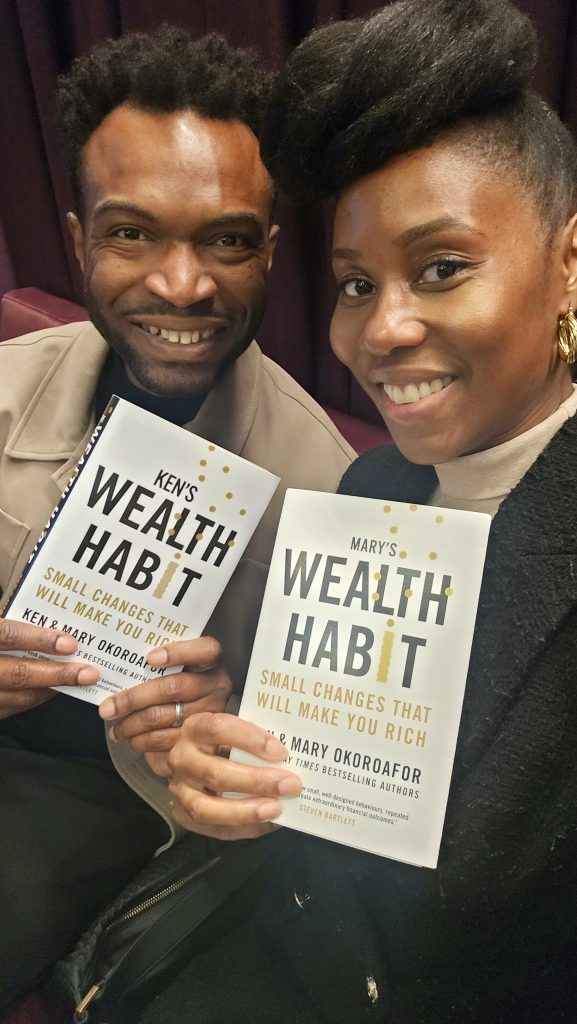
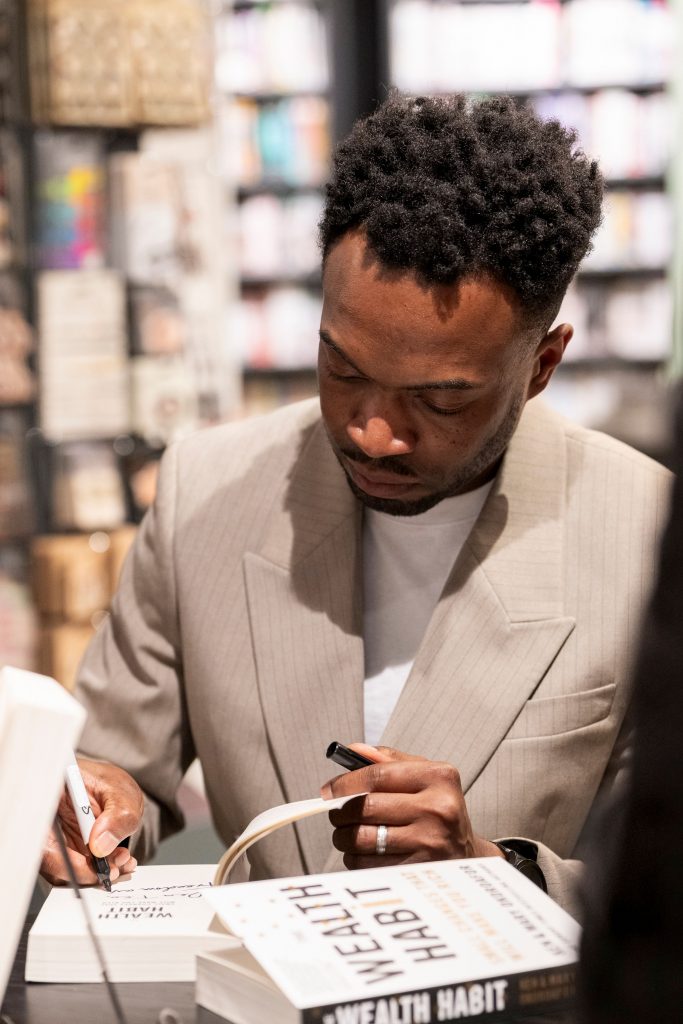
After 1 year of writing, it was beautiful to sign physical copies for readers 🙂

Recommended: Financial Joy vs The Wealth Habit

5. Show Our Children What's Possible

Although my parents might not have realised it, whenever they took some risk to start a business or do something enterprising, they were teaching my siblings and me.

So these days, whenever I want to aim for something bold, I often ask myself, what would our children learn from this? How would I grow from doing this?

Doing stuff that stretches me is one way of indirectly opening the minds of our children to endless possibilities. 

We also make a point of getting them involved in the smallest of things. 

For example, they helped to offer their ideas on the book cover design, choice of colours, and they even acted as accountability partners checking in weekly to see if we're hitting the milestones set.

6. Take Others Along

Since Mary and I made a video years ago sharing how we became mortgage free in 7 years, a number of other people bought into the vision and have achieved mortgage freedom.

Some did it in 10 years, some in 8 years, some in 15 years and so on.

But, a key thing to note is that a lot of these people needed someone they could relate to for them to say “if they can do it, I can do it, too!”.

Many of them have written us emails to tell us what an instrumental role we've played on their journey to success and what it has unlocked for their families.

The same thing applies to other goals that require audacity.

Take becoming Sunday Times Bestsellers for a second time with a second book, as Black authors.

Yes, it matters that we're Black authors. The publishing industry is hard, and it's even harder for Black authors.

We were the first ever couple in the UK to become Sunday Times Bestsellers, not once but twice in a row.

This is significant because, as Black authors, firstly, it's pretty rare to make the list.

Now, we've shown more people (no matter your background) that it is possible, and this will open doors for more people.

We did it because of you and others, demonstrating the compounding power of community (see chapter 18 of The Wealth Habit).

7. God Has a Design

We've been watching House of David recently on Prime, and in an epic scene, David is about to fight Goliath, and Samuel blesses him by saying, “may you be filled with the courage of Moses and the strength of Samson”.

Something about that spoke to me personally.

In the series, Mychal (Michal), the daughter of King Saul, serves as a pivotal character who deeply believes in David's divine destiny, often acting as a bridge between him and the realisation of God’s design.

Mychal actively encourages David to embrace his role as the future king, even when he feels overwhelmed or unworthy.

In my everyday world, this speaks to making sure that whatever we're working on is presented to God, and if it's part of His will, he will make our paths straight.

Most people reading this likely don't believe God has a design; however, this belief has been instrumental in helping me to fight for the future (fighting all kinds of “Goliaths”) by faith, even when it seems impossible.

God has a design, and it's always to His glory.

8. Supportive Family, Friends and Mentors

It helps massively to have a supportive spouse; in my case, Mary was also fully aligned with the mission and goal we had.

My family members mostly have a growth mindset, and they help in so many practical ways, e.g. childcare whenever we had to go on a podcast, radio, etc.

Friends (especially a handful) cheer us on and step in whenever family are unable to help.

Mentors remind us of the bigger picture.

All this together provides a system of encouragement and accountability, especially on days when we're tired or start to lose belief.

Recommended: How to Make Work Optional In Every Decade of Your Life

9. Experimental Mindset

When I was at college, I liked Chemistry, but couldn't see how it would help my future career.

Looking back on it now, it helped to shape what has become an experimental mindset.

Most people have a fear of failing at things, and I've certainly experienced that myself.

However, over time, the more I've tried things and learned from others, the more I've come to realise that there is never any failure, even if things don't work out.

I now see everything (small and big) as simple experiments. Some will work out, others will provide opportunities to learn and improve.

This has helped me to reduce that build in fear of failure that we've been conditioned to embrace as adults.

When I watch our children play today, they have that experimental mindset.

I believe every adult needs to rediscover it deep within.

10. T.H.I.N.K B.I.G

We've been reading a book called “You Have a Brain” by Dr Ben Carson, with our children, and highly recommend it.

A central message of the book is T.H.I.N.K. B.I.G., an acronym that stands for Talent, Honesty, Insight, Niceness, Knowledge, Books, In-depth learning, and God, designed to help readers achieve their potential.

Whenever I feel like something (e.g. a goal, life challenge or life vision) is way bigger than me, I remember to THINK BIG.

The ‘Insight', ‘Knowledge', ‘Books' and ‘In-depth Learning' aspects of THINK BIG remind me that I have agency (and so do you!) and can find answers to things that others might miss simply by directing my time away from distractions.

If ever you're in doubt about your potential or fear creeps in, THINK BIG. Dive deeper into each element, and you'll find your way.

Conclusion

I hope you've enjoyed reading my reflections on this topic. 

It's my belief that we'll all need audacity to enter and thrive in the future that we're going into right now with AI disruption, global uncertainty, war, etc.

That audacity could come from you choosing a simpler lifestyle, becoming debt-free, relocating somewhere new, starting or growing a business, investing more aggressively, learning new skills, working fewer hours and prioritising your health, forming better relationships, preparing better for retirement, etc.

Essentially, you need audacity to proceed when most people retreat.

Whatever your next step is, I hope this post has encouraged you and given you a sense of self-belief, purpose and possibility.

If I can help on that journey, feel free to get in touch. Details are below.

More resources to help you live by design and make your dreams happen:

  • Book a 121 Power Hour and get some coaching
  • Read The Wealth Habit: Small Changes That Will Make You Rich
  • Read Financial Joy: Banish Debt, Grow Your Money and Unlock Financial Freedom
  • Join Financial Joy Academy: Classes, Coaching, Accountability Partnerships, Community, Lunchtime Clubs, etc.

♻️ Thank you for reading this post and helping our work progress. Please share this post with others on WhatsApp or via email 😊.

What aspect of this post spoke to you personally? Got any questions about anything above or your own current situation? Comment below.

As always, in all things, be thankful and seek joy.
Financial Joy vs The Wealth Habit: Which Book Should You Read – And Do You Need Both?

March 18, 2026 by The Humble Penny 0 Comments

Financial Joy vs The Wealth Habit

Since we announced our new book, The Wealth Habit (now a Sunday Times Bestseller), the single most common question we’ve had in our DMs, our community, at events, by email, is this:

“I’ve already read Financial Joy. Do I actually need The Wealth Habit too?”

And from others:

“I haven’t read either. Which one do I start with?”

Both books are by us. Both are published by Quercus (an imprint of Hachette).

Both are about money, wellbeing and designing a life you love.

We get why someone looking at both covers might think: same authors, same topic – what’s the difference?

So we wanted to sit down and give you the most thorough, honest answer we can.

No marketing fluff. Just the truth about what each book does, who it’s for, and why we wrote both.

Financial Joy vs The Wealth Habit

Table of Contents

Toggle
  • Financial Joy vs The Wealth Habit: The Simplest Way to Understand the Difference
  • Why We Wrote Each Book
  • How the Two Books Are Built
  • Financial Joy: A Guided Ten-Week Programme
  • The Wealth Habit: A Four-Pillar System
  • The Feel: Healing vs Building
  • Frameworks: What You’ll Actually Walk Away With
  • What’s in The Wealth Habit That You Won’t Find in Financial Joy
  • What’s in Financial Joy That The Wealth Habit Doesn’t Replace
  • What Other People Say About Each Book
  • Endorsements for Financial Joy
  • Endorsements for The Wealth Habit
  • What Our Readers Experience
  • So, Which One Should You Read?
  • The Mission Behind The Wealth Habit
  • The Honest Truth

Financial Joy vs The Wealth Habit: The Simplest Way to Understand the Difference

If we had to capture each book in a single sentence:

Financial Joy is the reset. The Wealth Habit is the system.

Financial Joy is the emotional and practical reset that helps you get unstuck and finally feel in control of your money.

The Wealth Habit is the system that makes wealth effortless, inevitable and sustainable for life.

Or as we put it in the introduction to The Wealth Habit:

“Start with joy. Stay with habit. Finish with freedom.”

Financial Joy is where you start. The Wealth Habit is how you stay. Freedom is where you end up.

Why We Wrote Each Book

Financial Joy was published in 2024. It was our debut – the book we’d dreamed about for years.

We wrote it because when we asked our communities how they felt about money (especially post Covid), the same words kept coming up: stressed, worried, frustrated, anxious, overwhelmed.

We knew that feeling. We’d lived it. We wanted to write the book we wished we’d had when we were in that place – a practical ten-week plan to banish debt, grow your money and unlock financial freedom, with joy at the centre.

Mary: When we were writing Financial Joy, I kept thinking about the women in our community who were carrying so much silently, e.g. managing households, juggling work, worrying about money at 11 pm, but never feeling like they had “permission” to take control.

I wanted that book to be the friend who says: You’re allowed to sort this out, and here’s exactly how.

Financial Joy went on to become a Sunday Times bestseller.

We’ve received thousands of messages from readers who cleared debts, started investing for the first time, had money conversations with their partners and completely shifted how they felt about money.

That means the world to us.

But then something interesting started happening.

Readers who’d gone through Financial Joy – who’d sorted their budgets, tackled their debts, opened their ISAs – kept coming back and asking:

“Okay, I feel in control now. But how do I make this stick? How do I make wealth-building something that just happens in the background of my life, without constant effort and willpower?”

That’s the question The Wealth Habit was born to answer.

And we wrote it in 2025 (published 19th March 2026) because this is the moment people need it most. More on that later.

How the Two Books Are Built

The architecture is completely different, and that tells you everything about what each book is trying to do.

Financial Joy: A Guided Ten-Week Programme

Financial Joy holds your hand.

It’s split into three parts across ten weeks, designed so you can follow it week by week and emerge with your finances transformed.

The first four weeks lay the foundations – the inner work.

You design your life of financial joy, build a positive relationship with money, tackle your behavioural biases, and write your life vision using our POST Framework (Purpose, Objectives, Strategy, Tactics).

You also take your “Money Selfie” – a net worth snapshot that shows you exactly where you stand. No hiding.

Weeks 5 to 8 get deeply practical.

You master your day-to-day finances and learn our eight strategies for paying off our £380k mortgage in seven years.

Plus, you get a comprehensive introduction to investing in index funds, and explore how to grow your income through career moves and side hustles.

If you’re carrying debt and it’s keeping you up at night, Week 6 alone is worth the price of the book.

Weeks 9 and 10 look ahead.

i.e. retirement planning in serious depth (your financial independence number, the 4% rule, pension types, state pension entitlements).

This is followed by estate planning: wills, trusts, and creating your financial legacy for the next generation.

Each week ends with clear lessons and action steps. You finish with a plan, not just a feeling.

The Wealth Habit: A Four-Pillar System

The Wealth Habit is built as a house.

Four pillars, 20 chapters, and a roof that represents the Wealth Habit itself – a life where money works for you.

  • Pillar 1 (Build the Mindset) rewires how you think about money using behavioural science, neuroscience and financial psychology.
  • Pillar 2 (Build the Habit) moves you from knowledge to action with specific, named habits you can start today – automation systems, impulse controls, guilt-free spending frameworks.
  • Pillar 3 (Build the System) scales everything up through effortless investing, side-hustle strategy, geographic arbitrage and financial check-in rhythms.
  • Pillar 4 (Build the Life) ensures your wealth lasts and matters through generosity, relationships and an anti-fragile mindset. That entire fourth pillar has no equivalent in Financial Joy.

Each chapter contains a named Wealth Habit Mantra woven into the text.

i.e. punchy one-liners like “Habits > income” or “Where you live should serve your wealth, not strangle it”, designed to stick with you long after you turn the page.

And every chapter closes with a Pause for Reflection, a Small Action Step and a Chapter Summary.

Where Financial Joy gives you the map, The Wealth Habit gives you the autopilot.

The Feel: Healing vs Building

Pick up Financial Joy, and you’ll feel like you’re sitting down with two friends who’ve been where you are.

The opening chapters are deeply personal.

I (Ken) share the full story of emigrating from Lagos to London at 14 –

e.g. the one-bedroom we shared with strangers, the years struggling to finalise papers, finding free school meal vouchers in the playground and feeling like my prayers had been answered.

The Reebok Classics in Neon Blue bought with my first-ever £80 pay packet from a cleaning job.

The lifestyle inflation years – the Mercedes on finance, the Rolex, the Cartier bracelet, looking successful with nothing in the bank.

Mary shares growing up on a Hackney council estate, watching her eldest brother go from a penthouse to sleeping on the living room floor, starting a paper round at 14, making music CDs to sell in the school playground, and vowing never to rely on a job alone after watching colleagues get cut during the 2008 crash.

Those stories are there because Financial Joy understands that your relationship with money is emotional.

Before you can build, you need to heal.

The Wealth Habit opens differently. It opens with energy.

The introduction tells the story of how we met – and we won’t spoil it here because it’s one of those stories you need to read for yourself.

What we will say is this: it involves a property seminar, a moment of unexpected courage, a commitment wall and a first date that neither of us saw coming.

It’s the kind of opening that makes you smile and then makes you think.

It’s a love story wrapped in a financial vision, and that energy sets the tone for everything that follows.

Now, both books do serious mindset work, but they do different kinds.

Financial Joy’s mindset chapters are about healing: your money wounds, your parents’ money stories, the emotional baggage you’ve been carrying.

The Wealth Habit’s first six chapters (Build the Mindset) are about identity transformation and behavioural reprogramming –

  • the Wealth-Identity Shift,
  • the Scarcity Loop,
  • Money Triggers,
  • the neuroscience of why you know what to do but still don’t do it.

Financial Joy asks: where does your pain with money come from? The Wealth Habit asks: who do you need to become to build wealth automatically?

Even the very first page sets the frame.

Before the contents, there’s a definitions page. 

Wealth: from the 12th-century “welth” – a state of happiness, wellbeing and joy.

Habit: from the Latin “habere” – to have, to consist of. A small action you repeat until it happens automatically.

Two words. Two definitions. And suddenly you understand the whole book.

Frameworks: What You’ll Actually Walk Away With

Both books are packed with original frameworks, but they’re different in kind.

Financial Joy gives you foundational tools:

  • the POST Framework for writing your life vision,
  • the Money Selfie for knowing where you stand,
  • the Money Journey Map with six stages from insecurity to independence,
  • the Joyful Spending Plan for guilt-free spending, and
  • detailed retirement calculations, including your financial independence number.

Here’s what that looks like in practice.

In Week 4, you sit down and calculate your net worth for the first time – assets minus liabilities, all on one page.

For many readers, this is the first time they’ve ever seen their full financial picture.

It can be confronting, but it’s also liberating.

One reader told us she cried when she saw the number, but then felt relief.

“At least now I know,” she said. That’s what Financial Joy does. It gives you clarity.

The Wealth Habit introduces a different vocabulary:

  • the Habit Loop of Wealth™ (building on work by Tiny Habits, Atomic Habits, but uniquely applied to money),
  • the 1% Compound Ladder,
  • the Joy-Spend Radar,
  • the Set-and-Soar System for automation,
  • the Location-Leverage Loop for geographic arbitrage,
  • the Financial-Rhythm Method combining Japanese kakeibo and African esusu, and
  • four principles running through every chapter: Keep It Simple, Keep It Automatic, Keep It Compounding, Keep It Fun.

Here’s what that looks like in practice.

In Chapter 7, you set up the Set-and-Soar System: your salary lands, and before you even see it, automated transfers have already paid your future self, funded your investments, covered your bills and left you a guilt-free spending amount.

You don’t budget. You don’t decide. The system decides for you.

That’s the shift from Financial Joy’s “I’m in control” to The Wealth Habit’s “the system is in control.”

Financial Joy vs The Wealth Habit
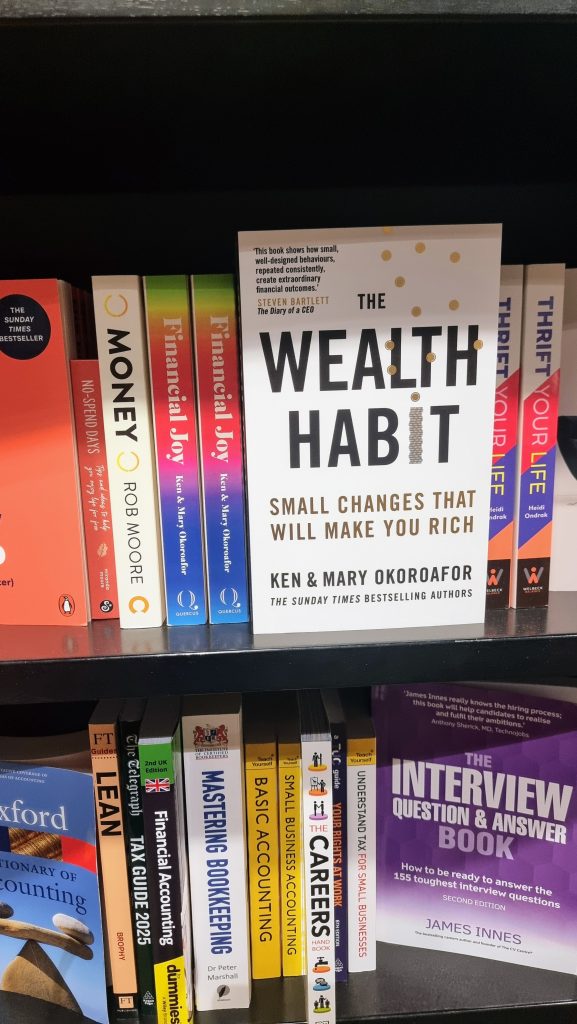
Spotted at our local Waterstones 🙂

What’s in The Wealth Habit That You Won’t Find in Financial Joy

If you’ve read Financial Joy and you’re wondering whether The Wealth Habit covers genuinely new ground, the answer is yes. Substantially.

  • The identity and neuroscience layer is entirely new.

Six full chapters on mindset rewiring using the latest behavioural science, neuroscience and financial psychology.

The Wealth-Identity Shift, Money Triggers, the Scarcity Loop, the Money-Guilt Cure – these go far deeper than anything in Financial Joy.

If our first book helped you understand why your relationship with money is complicated, this one shows you how to reprogram it at the neurological level.

  • The automation architecture is new.

Financial Joy teaches you how to budget, save and invest.

The Wealth Habit teaches you how to make all of that happen automatically, without willpower, through environment design and habit stacking.

  • The Global-Wealth Habit is entirely new.

Using geographic arbitrage and location awareness as a wealth strategy, and how this drives retirement outcomes.

We share our own story of leaving London.

In addition, we share the story of a couple from our community who moved from London to Coventry, halved their housing costs overnight and kept their London salaries.

We talk about friends earning UK income while living in Ghana, Thailand and Colombia.

Plus, case studies of people who have fully relocated and resources that helped them to do so.

And for those who can’t or don’t want to move, we show how even shifting a few miles can change everything.

We also have a Plan B Quiz to help you determine if you need a Plan B life or not.

  • The Generosity Habit is new.

An entire chapter on giving as a wealth-building habit, opening with the Neapolitan caffè sospeso – the custom of paying for a “suspended coffee” for a stranger.

It draws on the World Giving Index and the neuroscience of why generosity compounds into wealth.

  • The Anti-Fragile Money Mindset is new.

We share various case studies, including the story of a British-Ghanaian entrepreneur who watched a banker lose everything in the 2008 crash and went on to build an electric bike company in Ghana from nothing.

Half of all Fortune 500 companies were founded during recessions.

This chapter shows you why and how to think the same way.

Plus, how to thrive in a future of expected wars, pandemics, AI upheavals, recessions, etc, with case studies of people doing so today.

The goal is to help you develop the Anti-Fragile Money Mindset and move beyond the fragility that most people struggle from.

  • The AI and future-of-money dimension is new.

We wrote The Wealth Habit with one eye on where money management is heading.

It’s not just about AI side hustles (though the book includes detailed tables of AI-powered income ideas, from custom GPTs to AI digital products).

It’s about preparing you for a future where money is managed digitally, where automation replaces manual budgeting, and where careers are being reshaped by technology.

If Financial Joy gave you the timeless principles, The Wealth Habit equips you to thrive as those principles meet an increasingly digital world.

  • The global perspective is much broader.

Financial Joy is primarily UK-focused with universal principles. The Wealth Habit was written for a global audience from day one.

It includes stories from the UK, US, Kenya, India, China, Nigeria, Ghana, Portugal, Japan, Italy, NZ, Australia and beyond.

It references ikigai, ubuntu, la dolce vita, kakeibo, esusu and stokvel.

Financial figures appear in both GBP and USD throughout, so readers everywhere can immediately relate to the numbers.

Perhaps the strongest proof of that global ambition is what’s happened with translations.

The Wealth Habit has already secured two language translations – Complex Chinese and Italian – before it even publishes on 19th March 2026, with more expected.

Financial Joy received its Complex Chinese translation months after publication.

International publishers are picking up The Wealth Habit pre-launch because the message is universal: small habits, repeated consistently, build wealth anywhere in the world.

What’s in Financial Joy That The Wealth Habit Doesn’t Replace

This matters just as much.

The Wealth Habit doesn’t duplicate Financial Joy; it builds on it.

There’s material in our first book that you simply won’t find in the second.

  • The deeply personal origin stories 

The full, unfiltered account of both our backstories.

The Wealth Habit references our background but doesn’t retell those stories in full.

If you want to understand where we came from and why this mission matters to us so deeply, Financial Joy is where you’ll find that.

  • The step-by-step debt elimination chapter 

Our eight specific strategies for paying off a £380k mortgage in seven years, plus detailed mortgage advice on no-cap mortgages, consent to let and timing overpayments.

If you’re in debt right now, this chapter alone could change your life.

  • The full retirement and pension planning chapter

Step-by-step calculations, the retirement living standards framework, defined benefit vs defined contribution pensions, state pension entitlements, the 3.5% and 4% rule and worked examples for both traditional retirement and early financial independence.

The Wealth Habit doesn’t replicate this. It doesn’t need to.

  • The estate planning chapter 

Wills, trusts, lasting powers of attorney and intergenerational wealth transfer.

The legal and practical mechanics of protecting what you’ve built live in Financial Joy.

  • The day-to-day budgeting masterclass

Granular detail on mastering your daily finances.

The Wealth Habit assumes you’ve got this foundation and focuses on automating what you’ve built.

What Other People Say About Each Book

One of the best ways to understand the difference is to listen to the people who endorsed them. The language tells the story.

Endorsements for Financial Joy

  • “In it you’ll find a journey of ten weeks, each designed to take you ever closer to financial freedom the way it should be done: Joyfully.” – JL Collins, New York Times bestselling author of The Simple Path to Wealth
  • “It’s the Marie Kondo of getting your financial house in order.” – Brenda Emmanus OBE
  • “Reading the book is like sitting down with two caring friends who believe in you.” – Chad Carson

“Sort out.” “Hold your hand.” “Marie Kondo.” “Caring friends.”

That’s Financial Joy. The emotional reset. The practical declutter.

Endorsements for The Wealth Habit

“A practical, thoughtful guide to building wealth the way it actually happens: gradually, deliberately and sustainably.” – Steven Bartlett, entrepreneur, investor, Sunday Times bestselling author and host of The Diary of a CEO podcast

  • “The antidote to get-rich-quick culture. Wealth isn’t built in dopamine spikes – it’s built in the quiet compound of daily habits.” – TJ Power, neuroscientist and Sunday Times bestselling author of The DOSE Effect
  • “Ken and Mary focus on the only thing that actually moves the needle: behaviour. It’s a practical and empowering guide for anyone who wants to stop obsessing over the pennies and start focusing on the habits that truly lead to results. – Rob Dix, Sunday Times bestselling author of The Price of Money and Seven Myths About Money
  • “This book offers a calmer, more humane approach to wealth that will equip you with the mental and emotional systems to reimagine your relationship to wealth.” – Anne-Laure Le Cunff, neuroscientist and bestselling author of Tiny Experiments

“Well-designed behaviours.” “Quiet compound.” “Systems.” “Sustainable.”

Financial Joy is the reset. The Wealth Habit is the next step.

What Our Readers Experience

Let us share two moments that show the difference between these books better than any description we could write.

Story 1:

A woman in our community – a working mum, two kids, carrying credit card debt she’d never told her partner about – went through Financial Joy’s Week 4 and calculated her net worth for the first time.

She told us she cried when she saw the number.

But then she felt relief. “At least now I know,” she said.

Within three months, she’d had the money conversation with her husband, cleared two credit cards and started an emergency fund. That’s what Financial Joy does. It meets you in the mess and gives you a way out.

Story 2:

Then there’s a couple in our Financial Joy Academy who’d already done the Financial Joy programme.

They’d built their emergency fund, paid down their car loan and even dipped their toes into investing for the first time.

They were “in control” – but still doing everything manually.

Every month was a decision. Every transfer was a conversation. It felt like effort.

When they applied the Set-and-Soar System from The Wealth Habit, they told us:

“For the first time, we’re not managing our money. It’s managing itself. We check in once a month, and everything’s already done.”

That’s the shift. From effort to autopilot. From “I’m in control” to “the system is in control.”

Mary: Both stories are powerful, but the second one I feel even more personally because I know what it’s like to juggle motherhood, work and finances all at once.

When I was running a nursery, raising two small boys, and building The Humble Penny on the side, the last thing I had energy for was sitting down every week to manually move money around.

The systems in The Wealth Habit exist because I needed them too.

If you’re a parent or a carer or someone who’s just exhausted by life, this book was written with you in mind.

Financial Joy vs The Wealth Habit
Recording the audiobook for The Wealth Habit in our voices.

So, Which One Should You Read?

Start with Financial Joy if…

  • You’re feeling stuck right now.
  • You’re stressed about money, carrying debt, living paycheque to paycheque, or you’ve never properly taken control.
  • You need someone to meet you where you are and walk you through it.
  • You need the foundations – budgeting, debt elimination, investing basics, retirement planning, estate planning.

Financial Joy is the book that says: You are not behind. You just need a plan, and we’re going to give you one.

Start with The Wealth Habit if…

  • You already feel a bit in control, but want to go further.
  • You understand the basics but struggle with consistency or making it automatic.
  • You want a system that runs in the background.
  • You’re thinking about geographic arbitrage, AI-powered income, or building a financial life that thrives through uncertainty.

The Wealth Habit is the book that says: You’ve got the foundation. Now let’s build the house.

👉🏽The Wealth Habit also includes an optional 90-Day Wealth Habit Challenge with a free downloadable workbook, tools designed to take you from reading to doing.

Read both if…

You want the complete journey.

And honestly? Most people do.

Financial Joy gives you the emotional healing, the practical foundations and the technical knowledge. The Wealth Habit turns it all into a self-reinforcing, automated system that compounds for life. Together, they’re the full architecture.

The Mission Behind The Wealth Habit

We need to be straight with you about why we wrote this book.

Because it wasn’t for the royalties (although that would be nice!), and it wasn’t to repeat ourselves.

We’re on a mission to show that wealth isn’t reserved for the privileged few. It’s for people like us.

  • People who didn’t inherit money.
  • People who didn’t have connections.
  • People who started with nothing and built a life from the ground up.
  • People who believe in the power of small changes that compound.

If we can do it, so can you. 

We wrote The Wealth Habit now because the world needs it now. Not next year. Now.

Look around. People are anxious. The cost of living is squeezing families.

AI is reshaping careers faster than anyone expected.

Wages aren’t keeping up.

The old rules: get a degree, get a job, save into a pension, hope for the best, aren’t enough anymore.

And too many people are watching their financial future slip away while being told that wealth is for someone else.

We refuse to accept that.

One of the core ideas in this book is that wealth is not built mainly by earning more. It’s built by building better habits with the money you already have. Wealth isn’t built in big leaps. It’s built in layers.

  • A small automated transfer.
  • A guilt-free spending plan.
  • A 1% adjustment that compounds quietly over years.
  • Those layers, stacked consistently, create something extraordinary.

And the beauty is that anyone can start layering today.

With all the uncertainty around us e.g the cost-of-living crisis, AI disruption, economic change, we felt it was time to write a book that helps people manage money for the future, not the past.

A book that equips you to navigate these seasons with confidence and the genuine ability to thrive, not just survive.

That’s what The Wealth Habit was built to do.

The Honest Truth

We wrote Financial Joy because we wanted to help people who were stuck.

We wrote The Wealth Habit because we wanted to help people who were ready to fly.

Both come from the same place, our lived experience as a couple who went from sleeping on floors and washing dirty pound coins to achieving financial independence at 34 and paying off our mortgage in seven years.

But they serve different moments.

Financial Joy is the deep breath, the reset, the foundation.

The Wealth Habit is the system, the habits, the compounding engine that runs for the rest of your life.

Start with joy. Stay with habit. Finish with freedom.

If this message resonates with you, if you believe wealth should be accessible to ordinary people willing to build it, one small habit at a time, we’d be incredibly grateful if you:

👉🏽 Order your physical copies

👉🏽 The Wealth Habit is available globally 🌍 in all major book stores, e.g. Amazon, Waterstones, Foyles, Barnes & Noble, WH Smith, etc.

If this blog post has been helpful, please share it.

Send it to a friend, a family member, a colleague, your book club, your WhatsApp group – anyone who might benefit.

Every share helps us reach someone who needs this message.

Together, we can show that wealth is possible for ordinary families.

  • The Wealth Habit is now a Sunday Times Bestseller. Order and start reading it today.
  • Financial Joy is also a Sunday Times Bestseller. Order and start reading it today.

Thank you for helping us make wealth accessible to all.


Love,


Ken and Mary 💛

Why Small Changes Make You Rich

February 10, 2026 by The Humble Penny 0 Comments

Wealth isn't built in big leaps; it is built in layers.

Let’s say this upfront. Earning more money does matter, of course.

More income gives you options, flexibility and leverage.

But here’s the mistake most people make.

They think earning more is what creates wealth, but it isn’t.

What actually makes people rich isn’t dramatic income jumps.

It’s the small changes that quietly change how their money behaves over time.

We're Ken and Mary, and we’ve been managing our own money together as a couple for 16 years so far through different careers, income changes, life stages (e.g., raising two children), and building wealth in a way that supports our lives, not consumes them.

And over time, we realised something important:

The biggest breakthroughs didn’t come from dramatic moves, they came from small changes done consistently. 

This helped us achieve Financial Independence at the age of 34, including being mortgage-free in 7 years.

So, in this post, we want to explain why small changes actually make people rich and how to use them without burning out or losing what matters.

The focus here is on helping you to Build the Mindset, the first pillar for building wealth. More on this later.

Of course, some people inherit money, win the lottery, etc to become rich.

These are rare instances and aren't what we're talking about here.

In fact, people who become rich this way are more likely to lose that wealth over time because they didn't experience a wealth identity shift first, which would help to preserve that wealth.

Today, we're speaking to everyday people looking for ways to use the money they make today to create a financially abundant future.

Why small changes make you rich
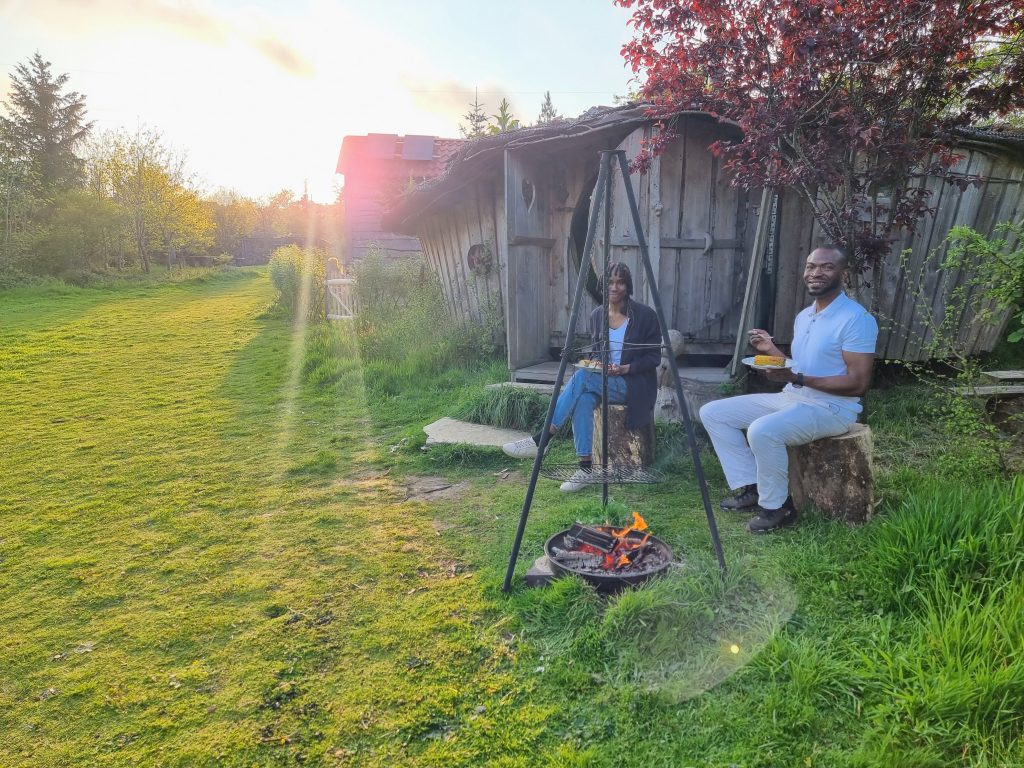
Enjoying the fruits of our investments in small ways 😊

Table of Contents

Toggle
  • Why Small Changes Make You Rich
  • 1. Putting “Earning More” In Context
  • 2. Why Small Changes Get Dismissed And the Cultural Perspective
  • 3. What Small Changes Actually Do
  • 4. Structure Beats Intensity
  • 5. Why Small Changes Calm the Nervous System (And Big Moves Often Don't)
  • 6. Why This Is How People Actually Get Rich
  • 7. Earning More Still Matters (But This Is How)
  • 8. Why This Approach Preserves Your Life
  • Conclusion

Why Small Changes Make You Rich

Let’s jump straight in.

1. Putting “Earning More” In Context

Think of earning more money like turning up the water pressure.

If your pipes are solid, more pressure helps. 

If your pipes are leaky, more pressure just creates a mess.

Income amplifies whatever structure is already there.

That’s why two people can earn more at the same time.

One feels calmer and the other feels more stressed.

Same income increase but different outcomes.

The difference isn’t discipline, it’s structure.

2. Why Small Changes Get Dismissed And the Cultural Perspective

Most people dismiss small changes because they feel insignificant.

For example,

  • Saving a little more.
  • Automating something.
  • Separating accounts.

It doesn’t feel impressive.

Behavioural research shows we’re wired to overvalue big, visible wins and undervalue slow, compounding ones.

It’s why a 10k bonus feels powerful, but a $300 or £300 monthly investment feels boring, even though the second one usually does far more over time.

There’s also a cultural reason small changes often get dismissed.

In many families and communities, progress was never gradual.

It came in leaps.

One big job. One big opportunity. One breakthrough moment that changed everything.

So we learned to respect big moves, not quiet systems.

Especially for people from immigrant backgrounds, working-class backgrounds, or communities that had to fight for every step forward.

When you’ve seen:

  • sacrifice 
  • long hours 
  • visible struggle 

“Small changes” can sound trivial. Almost disrespectful. Because historically, survival did depend on big effort.

For example, emigrating to another country, working every extra shift available, grabbing the one opportunity that could change everything, and showing visible progress so the sacrifice felt worth it.”

And speaking to that visibility piece… In some cultures, success had to be seen to be believed.

e.g. A better car, a bigger home, building a house back home, etc.

Clear signs that the struggle was worth it.

Quiet progress — like automated savings or long-term investing — doesn’t look like success.

So it gets undervalued.

But here’s the shift. Those cultural instincts made sense in environments where:

  • Income was unstable 
  • Systems didn’t exist 
  • Safety nets were weak 

In those contexts, you needed big wins like winning that big contract.

But in today’s financial systems, wealth is built differently.

Not through heroic effort, but through structure, consistency, and time.

So when we talk about small changes, we’re not saying “think smaller”.

We’re saying: build in a way that works with the system you’re actually in now.

Small changes aren’t passive. They’re strategic.

Enjoying today’s video so far?

Please take a moment to share this post with one other person. 

Every reader gives us a signal that our posts matter to you and that we should keep going and make the next post even better.

3. What Small Changes Actually Do

Here’s the key idea.

Small changes don’t work because they increase income. They work because they change the system.

They:

  • reduce reliance on willpower 
  • remove repeated decisions 
  • create consistency automatically 

For example:

  • Saving before you see the money 
  • Investing automatically every month 
  • Slightly increasing savings when income rises 
  • Separating everyday spending from long-term money 

None of these are dramatic. But they quietly change outcomes.

why small changes make you rich

4. Structure Beats Intensity

Let’s compare two people earning the same income.

Person A:

  • saves “when there’s money left” 
  • makes decisions manually 
  • relies on motivation 

Person B:

  • automates savings and investing 
  • separates accounts 
  • has fixed spending boundaries 

Same income. Very different results.

Person B isn’t more disciplined. 

Their life is just designed to work without constant effort.

That’s what small changes really do: they make good behaviour the default.

5. Why Small Changes Calm the Nervous System (And Big Moves Often Don't)

There’s one more reason small changes work so well, and it’s rarely talked about.

Money doesn’t just live on a spreadsheet or in your bank accounts. It lives in your nervous system.

Your brain is constantly asking one question: “Am I safe?”

When your finances feel unpredictable, that question never really switches off.

And when your nervous system doesn’t feel safe, you don’t make calm, long-term decisions.

You make short-term ones.

You rush. You avoid. You swing between extremes.

Not because you’re bad with money, but because your body is trying to protect you.

This is where big financial moves can actually backfire.

A big income jump can feel exciting, but if it also increases pressure, commitments, or expectations, your nervous system stays on high alert.

So even though the numbers look better, your body doesn’t feel better.

Small changes do the opposite. They send a quieter but more powerful signal:

“Things are under control.”

Automation. Buffers. Separation.

These don’t just change your finances; they change how safe your body feels day to day.

There’s research behind this.

Studies on decision-making show that when people feel under constant threat or uncertainty, they:

  • struggle to think long-term 
  • avoid complex decisions 
  • default to habits that reduce stress now, not later 

Calm systems create better outcomes because calm people make better decisions.

This is why small changes matter so much.

  • They reduce the number of decisions you have to make.
  • They reduce the feeling that everything depends on this month.
  • They reduce the emotional weight money carries.

And when your nervous system settles, consistency becomes possible.

And consistency is what allows wealth to compound, not intensity, not constant optimisation, not pressure.

Just systems that let you stay steady long enough for progress to stack up.

This is also why this approach feels different.

You’re not forcing yourself to be “better with money”. You’re creating conditions where being better becomes natural.

That’s what small changes really do.

6. Why This Is How People Actually Get Rich

This is where the word “rich” matters.

Small changes:

  • increase how much you keep 
  • increase how long you stay invested 
  • reduce the chance of blowing progress 

That’s what allows compounding to work.

Most wealth isn’t built by one big moment.

It’s built by:

  • staying consistent 
  • staying invested 
  • staying calm 

Small changes keep you in the game long enough for wealth to actually compound.

7. Earning More Still Matters (But This Is How)

Earning more money absolutely helps when the structure is right.

More income flowing into a good system accelerates everything.

However, more income flowing into a fragile system just increases pressure.

This is why we say small changes come first. So we’re not saying “don’t earn more.” We’re saying: earn more once the system is ready.

That’s when it really moves the needle.

8. Why This Approach Preserves Your Life

This approach matters because it doesn’t demand constant intensity.

You don’t need:

  • perfect months 
  • relentless optimisation 
  • financial obsession 

You build wealth quietly, consistently, in a way that supports your relationships, your health, your peace and your values.

That’s what wealth without losing your soul actually looks like.

This is the foundation of The Wealth Habit.

Small, repeatable changes that quietly turn income into lasting wealth.

Not hustle. Not extremes. Just better structure, over time.

In our new book, The Wealth Habit, across 20 chapters, we show you these small changes through 20 practical frameworks.

The book is split into 4 Pillars to help you build The Wealth Habit. Those Pillars are:

Pillar 1: Build The Mindset

Pillar 2: Build The Habit

Pillar 3: Build The System

Pillar 4: Build The Life.

These are reinforced by 4 Principles that make it all doable.

Plus, we include the latest behavioural science, neuroscience, financial psychology and global economic research.

👉🏽We think you’ll love it. Pre-order your copy of The Wealth Habit.

Conclusion

If this helped you see why small changes aren’t pointless but powerful, then writing this video has been worth it.

Nothing dramatic is required for the ideal financial life you’re building. Just better design.

Please feel free to comment below if you have any questions, and share this post with one other person on WhatsAapp.

Don’t go anywhere, check out these additional resources:

  • Order and Read The Wealth Habit
  • The 10 Silent Wealth Destroyers in Your 30s and 40s
  • How to Make Work Optional In Every Decade of Your Life

Watch the video version here:

Thank you, guys, so much for reading today’s post.

As always, in all things, be thankful and seek joy.

How to Make Work Optional in Every Decade of Your Life

January 31, 2026 by The Humble Penny 6 Comments

Most people assume that if they work hard enough, long enough, life will eventually get easier.

But for many people, the opposite happens.

Work doesn’t get lighter with age. It gets heavier.

More responsibility. More pressure. Less energy. Fewer options.

And that’s not because they failed. It’s because most people never planned their decades.

Today, I want to show you how to think about work differently, so that over time, work becomes optional, not compulsory.

This isn’t about retiring early. It’s about ageing without fear.

Here’s the idea most people miss:

You don’t wake up at 60 and suddenly get freedom. Freedom is built quietly, decade by decade.

Every decade has a role to play. If you drift through them, work tends to tighten its grip.

If you’re intentional, work loosens its hold.

Let me walk you through what that looks like, from your 20s to your 70s.

If you're not where you'd like to be, don't worry. Most people aren't. You can change your life in one year by taking massive action. You do so when you stop playing small and rise to what you're capable of.

My name is Ken of The Humble Penny and Financial Joy Academy, I’m a Chartered Accountant, a Former CFO and a Financial Coach.

Together with my wife, Mary, we achieved Financial Independence at the age of 34, including being mortgage-free in 7 years. We did it while raising two sons.

📌 We’re also Sunday Times Bestselling Authors of Financial Joy, and we recently announced our new book, The Wealth Habit, a mindset + habit system that makes wealth building effortless, inevitable and sustainable for life. It's now available for pre-order.

How to make work optional
Recording the audiobook for The Wealth Habit 🙂

Table of Contents

Toggle
  • How to Make Work Optional in Every Decade of Your Life
  • In Your 20s — Work Hard 
  • In Your 30s — Work Smart 
  • In Your 40s — Work How You Want 
  • In Your 50s — Work When You Want
  • In Your 60s — Work If You Want
  • In Your 70s and Beyond — Live & Enjoy The Life You Built On Your Terms 
  • The Pivot 
  • Conclusion

How to Make Work Optional in Every Decade of Your Life

Alright, let's dive into How to Make Work Optional in Every Decade of Your Life.

👉🏽I've also shared my personal reflections with each decade. let me know what you think in the comments.

In Your 20s — Work Hard 

Your 20s are not about balance. They’re about foundations.

This is the decade where working hard actually makes sense.

Not grinding endlessly, but building skills, confidence, and direction.

Here are some practical Examples:

1) Saying yes to long hours to build skills in demand, not just a payslip.

2) Reading and studying to level up while working full-time.

For example, in my 20s, I trained as a Chartered Accountant (ICAEW) while working full-time.

Then, later, in my early 30s, I topped it up with an Executive MBA at Cambridge University.

Yours could simply be an online course, tailored coaching or reading quality books.

The key is targeted reading and learning, and not doom scrolling on social media.

3) Taking the job that teaches you the most, not the one that looks flashy.

4) Start experimenting with your ideas (e.g. side hustles) and developing that experimental mindset.

5) Living simply so future you has options. No soft life.

6) Learning how money actually works and start investing

This decade is about foundations, not comfort.

The mistake people make in their 20s is optimising for lifestyle too early.

The goal here isn’t comfort.

It’s optionality later.

Personal Reflection: If I could offer one piece of advice to my 20-year-old self, it would be to invest more aggressively. No one is coming to save you.

Recommended: ISA Millionaires: How ordinary people became tax-free millionaires

In Your 30s — Work Smart 

Your 30s are different. Energy is still there, but time is no longer abundant.

Careers deepen. Families grow. Responsibilities stack up.

This is where working harder stops working.

So you start working smarter.

Here are some practical Examples in your 30s:

1) Negotiating pay rises tied to outcomes intentionally, rather than waiting for them to happen. 

2) Become an intrapreneur at your place of work for unusual financial outcomes.

3) Get a coach or mentor years ahead e.g. 10 years ahead in life and experience. 

You need other people to work smarter. Gradually build a valuable network.

4) Start side projects that fit around family life, amplified by tech e.g. AI and so on. 

These will help you create a portfolio career later in life.

For example, I recently became a Non-Executive Director (NED) for Fair4All Finance.

This won't have happened had I not started a passion project, The Humble Penny, while I worked my 9-to-5 as a CFO.

5) Investing automatically instead of trying to time the market

6) Build systems for your money, business, and life more generally.

7) Choosing fewer priorities and doing them well. Realising time, not hustle, is your scarcest asset

In your 30s, stop doing everything and start doing what matters.

Personal Reflection: If I could offer one piece of advice to my 30-year-old self, it would be don't be afraid. The future is yours to create. Set systems up that accelerate wealth creation, plus start that side hustle now and have a global perspective. You don't need anyone's permission.

In Your 40s — Work How You Want 

Your 40s are powerful. You’ve built experience.

You’ve seen what matters — and what doesn’t.

This is where the goal becomes alignment.

Working how you want means:

1) Turning down roles that don’t align with your values

2) Working remotely or flexibly without guilt

3) Owning assets (physical and digital) that earn alongside your effort

4) Structuring work around school runs, health, and energy

5) Saying “no” without needing to explain yourself

In your 40s, you’re no longer proving yourself. You’re protecting your life.

Your health, your family and your peace.

Work is still part of life, but it’s no longer in control of your life.

I’m 42, and given all the work my wife, Mary, and I have done in our 20s and 30s, we’re able to work how we want, doing what we love.

Are you feeling behind? This will encourage you…

I started life in the UK as a first-generation immigrant at 14, massively behind most people, as we started with nothing, but I achieved Financial Independence 20 years later at age 34.

It happened because I chose not to live as most people do.

Being behind incentivised me to explore multiple paths and learn from others directly to speed up my journey.

Financial freedom is never given to you; you have to take it gradually.

My mum started life again from ground zero (no money and immigrant challenges), aged 45 with 4 kids, but became financially independent in her 60s.

I’m sharing that to say it is possible for you as well. 

If you want to chat with me 121 to work out a game plan for different aspects of your finances and wealth-building journey, please book a Power Hour with me.

Personal Reflection: If I could offer one piece of advice to my 40-year-old self, it would be to make your health your number one priority. Period. No health, no wealth.

In Your 50s — Work When You Want

In your 50s, something important happens.

Urgency fades. Clarity sharpens.

This is the decade where time becomes more valuable than money.

Working when you want looks like:

1) Consulting a few days a week instead of full-time grind

2) Taking months off without financial panic

3) Choosing projects that feel meaningful, not urgent or necessary

4) Letting investments and systems quietly do the heavy lifting

5) Being present for family without watching the clock

Work should become selective. You’re no longer building from scratch, you’re harvesting what you’ve built.

Personal Reflection: If I had one desire for my 50-year-old self, it would be that I stayed happily married and continued building a deeper relationship with our children. Plus, I am enjoying hybrid living in the sun and I remain healthy.

In Your 60s — Work If You Want

Your 60s are about choice without pressure.

Some people still want to work, and others don’t.

The difference is this: You don’t need to.

You might be:

1) Mentoring because you enjoy it, not because you need the income.

2) Running a passion project on your terms.

3) Giving generously without fear of running out.

4) Saying yes only to work that brings joy.

5) Knowing your lifestyle is already funded.

Freedom isn’t stopping work. Freedom is having the choice.

Work becomes expression, not obligation.

And that’s freedom.

Personal Reflection: If I had one desire for my 60-year-old self, it would be that I am strong, surrounded by love, close friendships, I'm having impact and my relationship with God remains top priority.

In Your 70s and Beyond — Live & Enjoy The Life You Built On Your Terms 

By your 70s and beyond, the goal is never work, although some need work to avoid boredom.

The goal here is life.

This is where:

1) Your time is shaped around health, family, and joy, not income

2) Money quietly does its job in the background

3) You help where you want to, not where you’re needed to survive

4) You travel slower, deeper, and with intention

5) You’re present for grandchildren, community, faith, and legacy

6) You make decisions based on energy, not urgency

Work is no longer the focus. Life is. You’re not scrambling. You’re not surviving. You’re living on your terms.

Personal Reflection: If I had one desire for my 70-year-old self and beyond, it would be that I am still living a full, quiet life, healthy, strength training, travelling, spending lots of time with Mary, our boys and their children across the world. Plus, giving back in different ways.

The Pivot 

Here’s the key point before I come to a conclusion on making work optional:

Most people don’t end up working longer because they want to.

They do it because they didn’t build options earlier.

Work becomes heavier when decades are left to chance.

But when each decade has intention, work slowly becomes optional.

Conclusion

The real question isn’t: “When can I retire?” It’s: “What am I doing now that will make my future decades lighter?”

You don’t need perfection. You need direction, because the goal isn’t stopping work.

It’s building a life where you always have a choice.

Be excited about the future. It is unclaimed land waiting for you to build on it.

If this resonated, comment below and let me know where you are right now. What kind of options do you want your future self to have?

Finally, I want to take a moment to thank Jill Scott for inspiring this post.

Don’t go anywhere, check out these resources to help you make work optional, no matter what decade you're in:

  • Need 121 coaching? Book a Power Hour
  • 10 Silent Wealth Destroyers in Your 30s and 40s
  • 10 Hidden Games The System Uses to Keep You Poor

Thanks for reading this post.

♻️ Share it with others who need the knowledge and a shift in their thinking.

Watch the video version of how to make work optional across every decade of your life:

As always, in all things, be thankful and seek joy.
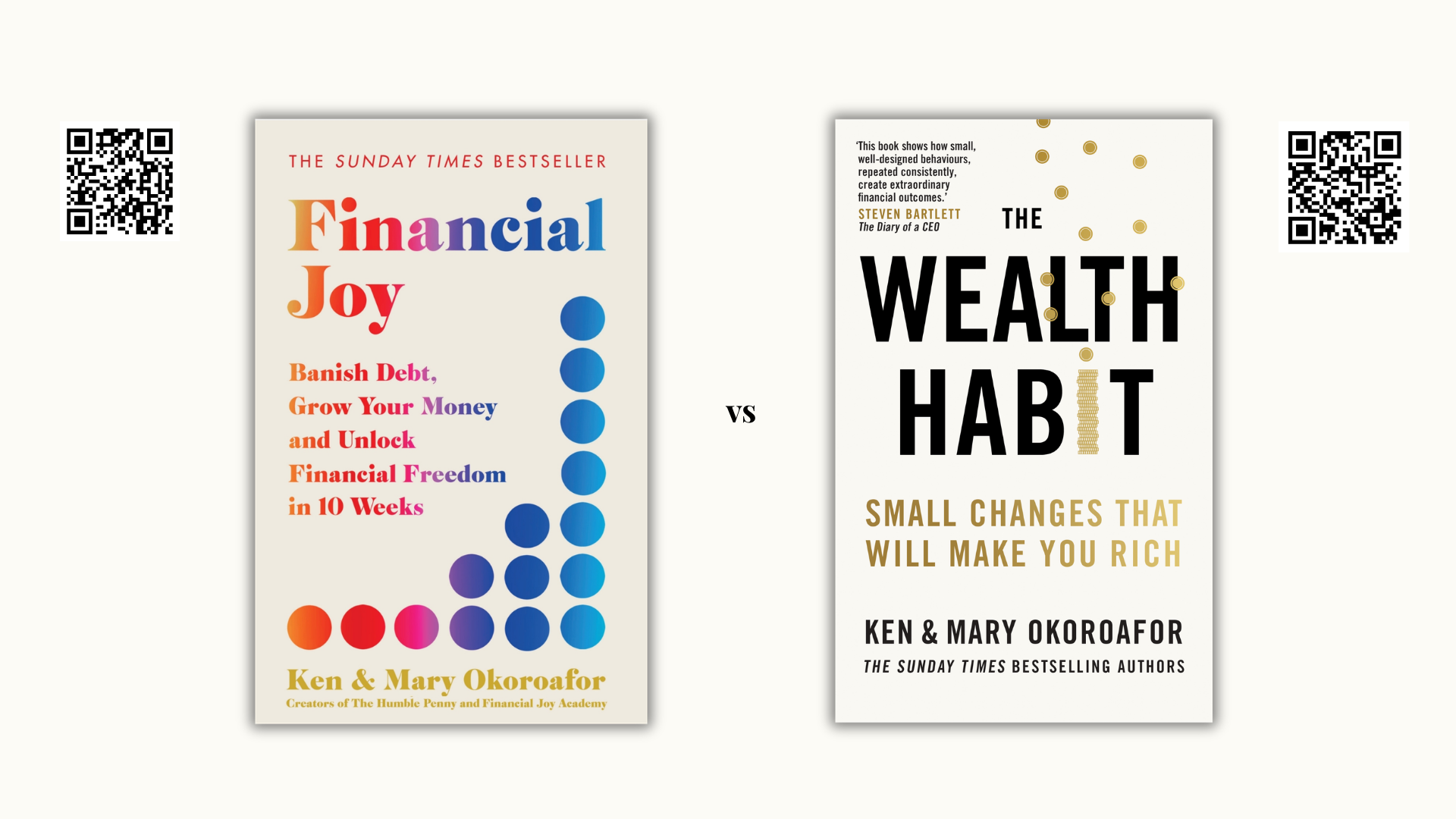
10 Hidden Games the System Uses to Keep You Poor

December 27, 2025 by The Humble Penny 2 Comments

10 Hidden Games the System Uses to Keep You Poor

Most people don't realise it, but they are playing a game they never agreed to play.

They wake up and rush from one place to another. If they're lucky, they've got a job to go to.

Then, they pay their bills and taxes every single month.

They scroll through their phones up and down, go to bed, wake up the next day, and repeat the same things over and over again.

What if I told you that this is a game that was designed for you to play, but never ever to win? 🤔

You see, for this game to continue being played, it needs certain players in the game.

And that's where you and I come into the picture.

It needs the consumers, workers and taxpayers.

But this game has a game designer and a game owner.

The people who own the game and design the game are the big companies, the media, the people who run the country, and the people who are unseen in the picture.

What exactly is this game that we are all playing?

And how could we get out of this game if we wanted to get out of it or stop playing the game?

You see, the one thing that connects the players of the game to the owners and designers of the game is money.

10 hidden games the system uses to keep you poor

And the way that this manifests in our lives day to day is it shows up as fear. You might have:

  • Fear of more taxes rising.
  • Fear of missing out in life or being left behind.
  • Fear of high inflation and the cost of living rising, and potentially being unsustainable.
  • Fear that other people might be taking your job or jobs.
  • Fear of AI potentially taking your job.
  • Fear of being controlled by digital IDs, for example.
  • Fear that you are running out of time as you age, and you can't sustain yourself as you head towards your future retirement one day.
  • Fear, generally speaking, that you are so deep in this game that you are paralysed and can't do anything at all.

The thing I've learned about this game, having studied this game and played the game, is that winning every match in the game is not how you win the game.

The only way to win the game is actually if you don't play the game at all.

If you really think about it, when we stop paying, because everything is so connected to money, we actually stop playing this game.

I've decided to write this post today because we've noticed a lot that's going on in the lives of our friends, family members, followers, and community members. When we meet people in person, they echo the same messaging.

By the end of this post, you will know exactly what that game looks like, and you'll know how to play that game better or how to stop playing that game.

My name is Ken of The Humble Penny and Financial Joy Academy, I’m a Chartered Accountant, Former Chief Financial Officer and Financial Coach. 

👉🏽Together with my wife Mary, we’re Sunday Times Bestselling Authors of Financial Joy, and we recently announced our new book, The Wealth Habit, which is all about the small changes that will make you rich.

The Wealth Habit is a groundbreaking, behaviour-driven approach to wealth-building that rewires the way you think about money, turning financial success into a series of tiny, effortless, repeatable actions. 

Thank you to everyone who has ordered a copy so far! It really means a lot to us. 

And good news, we agreed to an Italian translation for The Wealth Habit (rare pre-publication), and we expect more language translations the more you guys support us by ordering and gifting copies.

📍 So please order your copy of The Wealth Habit here. 

Share this post with others who are interested in this topic.

Let’s dive straight in!

Table of Contents

Toggle
  • 10 Hidden Games the System Uses to Keep You Poor
  • Game 1 – The Housing Game: Bigger House = Success (But What Does Freedom Cost?)
  • Game 2 – The Tax Game: Employees Pay Upfront, Owners Pay Later
  • Game 3 – The Ego Game: Spending to Impress
  • Game 4 – The Career Game: Pay Rises That Trap You
  • Game 5 – The Data Game: Your Attention and Clicks Are Currency
  • Game 6 – The Social Media Game: You Are the Product
  • Game 7 – The Consumption Game: Small Leaks Sink Big Boats
  • Game 8 – The Time-for-Money Game: You’re Trained to Trade Hours for Pounds
  • Game 9 – The Identity Game: Chasing an Image Is Exhausting
  • Game 10 – The Information Game: Noise Is Control
  • Putting it all together: a practical 10-step checklist to start winning
  • Why this matters: the difference between playing and choosing
  • Final thoughts

10 Hidden Games the System Uses to Keep You Poor

I'll walk through each of the ten games, explain how the system benefits from it, give real-life examples, and provide practical steps you can take right now to begin breaking free.

Game 1 – The Housing Game: Bigger House = Success (But What Does Freedom Cost?)

The housing game runs on a simple cultural message: a bigger house equals success.

The system pushes credit, long mortgages and rising property prices so households feel compelled to stretch themselves into homes they can't truly afford.

The result? People trapped in high monthly payments, working decades longer than they otherwise would, with little time or financial flexibility.

Think of a couple who takes a 35-year mortgage on a house worth £700,000 and pays £3,000 a month before bills.

That level of fixed cost makes saving difficult, reduces options and ties them to the job they have simply to avoid defaulting.

The bank legally owns the house until the mortgage is repaid and you are effectively renting happiness from a financial institution for decades.

I remember meeting a young millennial couple on a TV show we filmed in Cornwall.

They were so burdened by debt that they chose another path: they rented a parcel of land surrounded by nature and built a modest, off-grid home from local materials (see pic below).

In addition, they planted food, sourced essentials locally and worked hard to clear non-mortgage debts.

They traded perceived status for real freedom. It wasn't glamorous, but it was real, sustainable and theirs.

system
Here we are on the set of the show, ‘Rich Holiday, Poor Holiday'. The couple's modest home is the one with solar panels in the distance.

Mary and I made a decision early on to own our home outright as quickly as possible.

We paid our mortgage off in 7 years with much sacrifice, while also investing.

That choice changed everything, and it bought time, reduced anxiety and freed up money to invest more in the stock market.

How to stop playing (or play differently)

  • Buy a house that supports your goals, not your image. If your mortgage steals your freedom, it isn't an asset, it's a shackle.
  • Make your home an income generator: rent a room, create a workspace to lease, or host short-term stays where appropriate.
  • Think small and strategic: a smaller mortgage gives you optionality to invest, switch careers or start a business.
  • Run the true numbers: account for tax, repairs, insurance and opportunity cost. If a £500 monthly mortgage increase prevents you from investing £500 monthly into an index fund, compare the long-term outcomes.
  • Consider alternatives: renting, co-housing, house hacking or paying down high-interest debt before upgrading your living standard.

Recommended: Pay Off Mortgage Early or Invest?

Game 2 – The Tax Game: Employees Pay Upfront, Owners Pay Later

One of the clearest structural advantages in the system is taxation rules and the way they're applied.

Employees have tax taken at source i.e. money is removed before they ever touch it.

Business owners and investors, on the other hand, often pay tax after applying legitimate deductions, allowances and reinvestments.

Combine this with powerful firms that can minimise their taxes with teams of accountants, and you get a system that extracts more from everyday workers.

There is also the harsh reality that the more you earn in a traditional job, the more benefits and tax-free allowances you risk losing and the more complexity you face.

For example, I often see this – someone who gets promoted and now earns £110k.

They're working more hours with more responsibility but the promotion also pushes them into higher tax brackets (effective 60%) and reduces their tax-free personal allowances and even childcare benefits.

The net effect is more money out of your pocket and less time for yourself.

How to stop playing (or play smarter)

  • Learn the tax rules: ignorance costs money. Know what reliefs and allowances exist in your country (for example, ISA or pension allowances in the UK) and use them.
  • Start a side hustle: legitimate business expenses reduce taxable profit and teach you to treat income differently.
  • Use tax-efficient vehicles: pensions, ISAs, tax-free allowances and salary sacrifice schemes where available.
  • Claim what’s legitimate: track business-related costs, and if needed, consult a qualified accountant for tax planning — it often pays for itself.
  • Think long-term: invest using tax wrappers; slightly lower tax now can compound into significantly more freedom later.

Recommended: Book a 121 Power Hour Financial Coaching session with me

Game 3 – The Ego Game: Spending to Impress

The ego game is deceptively simple: you buy things to project success.

Lease a car that costs £700 per month to look successful.

Upgrade your wardrobe to match the latest online image.

Buy the fancy coffees, and it becomes part of your identity.

But this showmanship comes with a cost — the small ongoing drains and the psychological need to maintain the image.

I was recently at the shopping mall to buy a gift for my son's birthday.

We drive a modest car we've owned for over nine years so far.

While parked, I noticed people in expensive cars that, in truth, were likely draining their ability to save and build wealth.

When you look past the shiny exterior, what is the true life cost — lost years of freedom, extra working hours, stress?

How to stop playing

  • Choose substance over show. Spend for purpose, not praise.
  • Calculate the true cost of status purchases: depreciation, insurance, fuel, maintenance and the opportunity cost of what that money could have earned invested.
  • Practice a cooling-off period on big buys. Wait 30 days and see if the desire persists.
  • Adopt a “value-first” spending rule: does this purchase buy me time, peace, health or growth? If not, it's not worth the trade-off.

Game 4 – The Career Game: Pay Rises That Trap You

The career game trains us to believe promotions will lead to freedom.

Yet every promotion often brings higher taxes, creeping expenses and less time.

I've seen it many times: a promotion that raises a salary from £70k to £120k, followed by an upgraded car, a bigger home and then the shock of losing personal allowances once thresholds are crossed.

The result is paradoxical — you earn more but feel poorer.

This is lifestyle creep coupled with policy quirks. The company gets more productive labour; the system gets more taxes and more consumption. You get less control.

How to stop playing

  • Use your job to fund freedom, not a fancier lifestyle. Put pay rises straight into investments or debt repayment rather than into new recurring spending.
  • Automate saving: set up direct debits that “pay you first” into savings and investments before you see the money in your main account.
  • Build income streams outside your job: investments, rental income (if done tax efficiently), digital products or side businesses, and reduce reliance on salary hours.
  • Keep expenses flat even as income rises — maintain your standard of living while redirecting the marginal income to long-term security.

Game 5 – The Data Game: Your Attention and Clicks Are Currency

Every click, search and “Accept cookies” is a tiny transaction where you trade information for convenience.

That data gets processed and sold.

Advertisers and platforms know what you searched for and will show you offers to spend.

Devices in your home listen and observe patterns that are eventually monetised.

That surplus information is used to encourage spending and consumption that benefits companies, not you.

Search once for a holiday, and for weeks, your feed is full of flight deals.

Say the word “exercise” near a smart speaker and you’ll be served fitness ads. This is not magic; it’s a business model.

How to stop playing

  • Turn devices off or put them on airplane mode when you need privacy.
  • Limit app permissions and tracking on your phone; delete or restrict apps that listen or collect excessive data.
  • Use privacy tools: privacy-focused browsers, ad blockers and consider a VPN when on private or public Wi‑Fi.
  • Keep certain conversations out of listening range of smart devices. If a device doesn’t need listening features, disable them.
  • Create offline time — walks, hobbies, reading physical books, and reduce digital exposure that prompts unnecessary spending.

Game 6 – The Social Media Game: You Are the Product

Social platforms are designed to keep you scrolling. The attention economy turns time into ad revenue.

When you spend hours consuming curated lives, your perspective narrows into comparison and distraction.

Take “Emma” – she spends two hours a day scrolling TikTok. That’s roughly 730 hours a year — more than 30 days a year of wakeful time — lost to feeds designed to keep her coming back.

What could a whole month per year of purposeful work or rest do for your financial and emotional life?

Worse, many of the things you see are carefully selected to trigger spending, insecurity or envy.

The platforms win when you stay, advertisers win when you buy, and your long-term projects lose attention.

How to stop playing

  • Limit scrolling to specific times: set a daily cap (e.g. 20–30 minutes) and stick to it.
  • Be deliberate about who you follow. Prioritise creators who teach, challenge or uplift rather than those who only entertain or provoke.
  • Create more than you consume. Use the time you reclaim to build skills, write, craft a side business or invest in relationships.
  • Batch social media checking: pick two or three short windows for checking rather than continuous browsing.
  • Try a digital Sabbath: a full day or weekend offline to reset attention and perspective.

Game 7 – The Consumption Game: Small Leaks Sink Big Boats

We often think the problem is the big purchases: the house, the car, the holiday.

But the real daily drain is the small, emotionally charged purchases e.g. the takeaways, coffees, impulse buys, that quietly erode your ability to save.

A friend once told me they spend up to £1,500 a month on takeaways alone.

That’s roughly £18,000 a year — money that could have been invested to build future optionality.

Or consider a modest £250 per month leak on miscellaneous treats. That’s £3,000 a year.

Reinvested with a simple a system, these amounts compound and grow.

The point: small, frequent spending often keeps people in a paycheck-to-paycheck loop while giving them temporary emotional boosts.

How to stop playing

  • Pay yourself first: automate transfers to savings or investments as soon as you get paid.
  • Practice a pause: ask “will this matter in 30 days?” before buying.
  • Track and categorise every expense for a month. You’ll be surprised how leaks add up.
  • Create replacement rituals for emotional spending: a walk, a call to a friend, or a 24-hour wait before ordering.
  • Use rules like the 30-day rule for non-essential purchases and a monthly treat budget so small pleasures don’t derail long-term goals.

Game 8 – The Time-for-Money Game: You’re Trained to Trade Hours for Pounds

We’ve been conditioned to exchange time for money.

If you don’t work, you don’t earn.

That’s a brittle model — illnesses, job loss or simple ageing can abruptly cut earning capacity.

Sarah, who works long pharmacy shifts, knows the pain: when she’s off sick, her income drops to zero.

That fragility is built into the system to keep people needing steady paycheques.

The alternative is to build income that doesn’t require your constant presence: leverage, capital, and systems that work independently of your direct hours.

How to stop playing

  • Create assets that earn while you sleep: investments, rental income, digital products or intellectual property.
  • Build leveraged businesses: hire people, automate processes and use technology so you can scale without adding hours.
  • Convert skills into products: write an eBook, create a course, build templates or sell a service that can be packaged.
  • Use your job as a platform to invest in passive income streams — don’t treat salary as the only answer.

Recommended: Join The Free Rocket Your Income Challenge. The next one starts on 5th January 2026. Click the link for future dates.

Game 9 – The Identity Game: Chasing an Image Is Exhausting

Society encourages us to chase identities: the senior title on LinkedIn, the aspirational car, the curated Insta feed.

That pursuit of external validation becomes exhausting and attaches your self-worth to things that are transitory. When your sense of success depends on what others think, you spend more energy proving it than living it.

There’s a deep freedom in detaching your worth from external markers.

Quiet building e.g. working on your values, progress and peace without broadcasting every step, is a radical act.

How to stop playing

  • Detach self-worth from external signs. Practice internal metrics: peace, progress and purpose.
  • Build quietly. You don’t need applause to make meaningful progress. Let results speak later.
  • Limit public comparison: unfollow accounts that make you feel inadequate and spend more time with real people who know you personally.
  • Journal on values. When a potential decision conflicts with your stated values, pause and reassess.

Game 10 – The Information Game: Noise Is Control

The media landscape is designed to grab your attention with constant updates, outrage and breaking news.

This creates perpetual anxiety and a sense of urgency that’s profitable for broadcasters and platforms.

The news cycle exists hourly because repeated exposure keeps you hooked. But constant news consumption rarely makes you better off — it often makes you more fearful and less focused.

Take Ben as an example: he starts his day scrolling headlines and ends it anxious but no wiser.

The buffet of information is tempting, but stuffing yourself on the hottest takes leaves you distracted and depleted.

How to stop playing

  • Limit news intake. Decide specific times to check the news rather than constant updates.
  • Read long-form books and long-term perspectives rather than headline-driven snippets.
  • Follow credible, calm thinkers who focus on long-term planning rather than breaking scandal-driven stories.
  • Focus on what you can control: your habits, your savings rate, your skill growth and your relationships.
  • Create an information diet: set daily limits for short-form content and dedicate deliberate time for deep reading and learning.

Putting it all together: a practical 10-step checklist to start winning

Understanding the games is only half the battle.

The other half is building a quiet system of habits that slowly shift the balance of power back to you.

Here is a simple checklist – one item for each game – that you can use to begin changing your trajectory:

  • Housing: Run the true numbers for your home and identify one way to make it an asset (rent a room, workspace or pay down high-interest debt).
  • Tax: Set up a tax-friendly savings plan: max out pension/ISA/retirement allowances where available, and book a consultation with an accountant.
  • Ego: List three status purchases you’ll pause for 30 days and revisit before buying.
  • Career: On your next raise, automatically allocate a fixed percentage into investments or debt reduction.
  • Data: Audit your devices and revoke permissions for three apps that don’t need location or microphone access.
  • Social Media: Set a daily screen-time limit and pick two creators who add real value to follow.
  • Consumption: Track all discretionary spending for one month and identify leaks you can cut to save £100–£300 or $300–$500 per month.
  • Time-for-money: Create one passive income experiment (an eBook, online course, rentable room or small investment plan) and schedule time weekly to build it.
  • Identity: Write down three values that actually matter to you and one small way to reflect them in daily life.
  • Information: Designate at most two news-check windows per day and commit the rest of your time to reading books or long-form learning.

Why this matters: the difference between playing and choosing

Every one of these games is structured to enrich the designers i.e. corporations, media companies, lenders and the unseen algorithms that profit when you participate.

If you keep playing by their rules, you’ll likely end up working longer, paying more, and having less freedom. But the truth is simple: if you stop paying, whether literally by reducing consumption or metaphorically by withholding attention, time and emotional energy, you stop playing.

Winning the game isn’t about tricking the system. It’s about refusing to be played.

You do that by understanding the rules, creating a deliberate financial and psychological system that supports your long-term goals, and quietly building assets that buy you time and peace.

I want to leave you with a line I often say: the only way to truly win this game is not to play it.

It requires clarity, focus and small daily choices that compound into enormous freedom.

Choose one of the ten games above and start there. Revisit this article in 30 days, and you'll be surprised by how far consistent small actions can take you.

Final thoughts

We live in a cleverly designed world.

It offers convenience and promise while quietly extracting time, attention and money from those who don't see the patterns.

When you understand the mechanisms — from mortgages and taxes to data tracking and identity chasing — the choices that lead to peace and financial independence become clearer.

Becoming financially independent doesn't happen overnight.

It is built slowly: a paid-off mortgage here, a monthly investment there, a side hustle that grows quietly over the years.

Build quietly. Protect your attention. Pay yourself first. Choose peace, progress and purpose over performance.

If you take nothing else away from this piece, hold this: the system rewards those who design it. Your job, when you're ready, is to design a life that rewards you.

More resources to help you build sustainable wealth and stay ahead of the negative systems of this world:

  • Book a 121 Power Hour Financial Coaching session with me
  • Read Financial Joy (a 10-week plan we call The “RESET”) and also The Wealth Habit (The mindset and habit “SYSTEM” to beat the system)
  • Join our global learning platform and community of like-minded people at Financial Joy Academy

Over to you – Which one of these 10 games are you currently playing and want to stop? What other games have I missed out on in our list? Comment below and share.

Watch the video version about the 10 Hidden Games the System Uses to Keep You Poor:

As always, in all things, be thankful and seek joy.
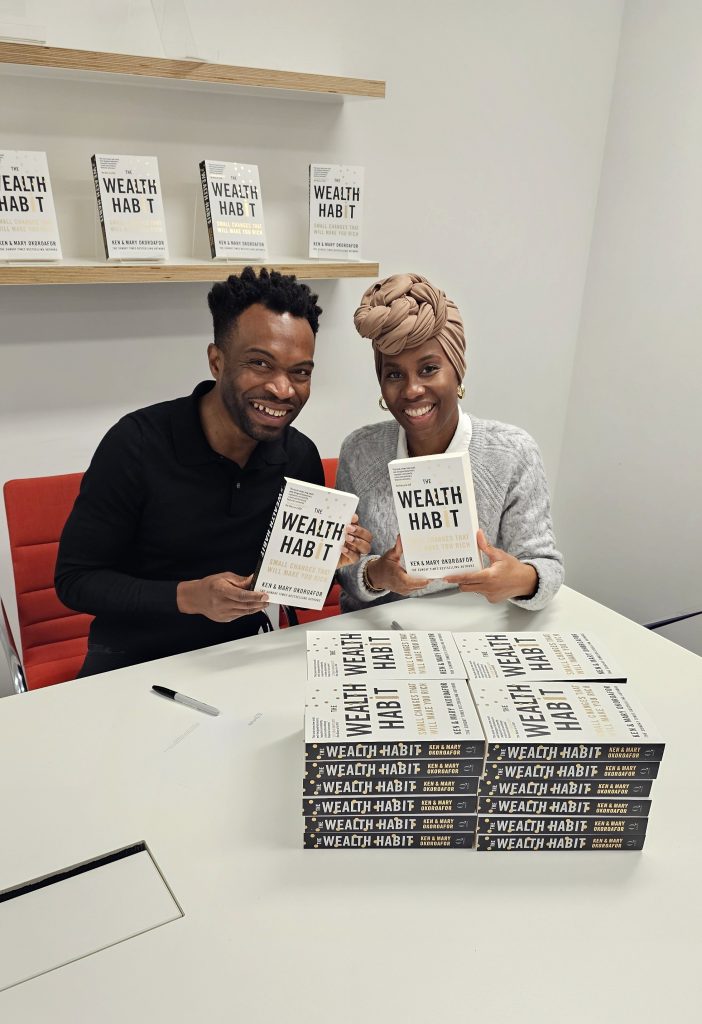
  • Go to page 1
  • Go to page 2
  • Go to page 3
  • Interim pages omitted …
  • Go to page 49
  • Go to Next Page »

Primary Sidebar

About-the-humble-penny

We are Ken and Mary Okoroafor, founders of The Humble Penny®.

Learning how to take control of our finances, grow our money and develop healthy money habits has transformed our lives since our early days as a young couple with little money having started out as immigrants. It enabled us to become mortgage-free in 7 years and also achieve Financial Independence aged 34!

Today we live purposefully to help others achieve Financial Freedom and ultimately create meaningful lives of Financial Joy.

Follow us

  • mail
  • facebook
  • twitter
  • instagram
  • youtube

Popular Posts

  • BEST SIDE HUSTLE IDEAS UK | 50 Ways to Make Extra 1000 a Month
  • 7 Guaranteed Ways On How To Make An Extra £1000 A Month (2022)
  • 12 Best Income Generating Assets for Passive Income (2022)
  • How To Prepare For a UK Recession 2022 (ACT NOW)
  • BEST VANGUARD FUNDS: ETFs and Index Funds For Financial Independence
  • How To Start An Online Business In 7-DAYS

Create a financial life you love. Subscribe via email:

Menu
  • HOME PAGE
  • About
    • About Us
  • Blog
  • Course
  • Programmes
  • Workshops
  • Free Resources
    • Free Courses
    • Start a Blog Tutorial
    • Best Resources
    • Books We Love
  • PRIVACY POLICY
  • COOKIE DISCLOSURE
  • DISCLAIMER
  • CONDITIONS OF USE
  • Contact Us
Tiktok

To help you remove money stress and achieve financial independence

logo fja

Create a financial life you love.
Subscribe via email:

Menu
  • HOME PAGE
  • About
    • About Us
  • Blog
  • Course
  • Programmes
  • Workshops
  • Free Resources
    • Free Courses
    • Start a Blog Tutorial
    • Best Resources
    • Books We Love
  • PRIVACY POLICY
  • COOKIE DISCLOSURE
  • DISCLAIMER
  • CONDITIONS OF USE
  • Contact Us
Tiktok