
• Skip to main content
  • Skip to primary sidebar
Tiktok
Work With Us
Work With Us
The Humble Penny
Menu
  • Home
  • Shop
  • Books
    • THE WEALTH HABIT
    • Financial Joy
  • Courses
    • One Grand Plus
    • Take Control Bootcamp Planner
    • Make Money Monthly With Affiliate Marketing
    • Budget For Life
    • Super Simple Investing
    • FIRE Superpower
    • Rocket Your Income
    • Value Bundle
  • Coaching
    • 121 Coaching
    • Financial Freedom Coaching
    • Financial Joy Academy (FJA) Membership
    • Architect Programme
    • Financial Joy Academy (FJA) VIP
  • Workshops
  • About
    • About Us
    • Contact
  • Blog
  • Free
    • Free Courses
    • Start a Blog Tutorial
    • Best Resources
    • Books We Love
Order Now
The Humble Penny
  • Home
  • Shop
  • Books
    • THE WEALTH HABIT
    • Financial Joy
  • Courses
    • One Grand Plus
    • Take Control Bootcamp Planner
    • Make Money Monthly With Affiliate Marketing
    • Budget For Life
    • Super Simple Investing
    • FIRE Superpower
    • Rocket Your Income
    • Value Bundle
  • Coaching
    • 121 Coaching
    • Financial Freedom Coaching
    • Financial Joy Academy (FJA) Membership
    • Architect Programme
    • Financial Joy Academy (FJA) VIP
  • Workshops
  • About
    • About Us
    • Contact
  • Blog
  • Free
    • Free Courses
    • Start a Blog Tutorial
    • Best Resources
    • Books We Love
  • Home
  • Shop
  • Books
    • THE WEALTH HABIT
    • Financial Joy
  • Courses
    • One Grand Plus
    • Take Control Bootcamp Planner
    • Make Money Monthly With Affiliate Marketing
    • Budget For Life
    • Super Simple Investing
    • FIRE Superpower
    • Rocket Your Income
    • Value Bundle
  • Coaching
    • 121 Coaching
    • Financial Freedom Coaching
    • Financial Joy Academy (FJA) Membership
    • Architect Programme
    • Financial Joy Academy (FJA) VIP
  • Workshops
  • About
    • About Us
    • Contact
  • Blog
  • Free
    • Free Courses
    • Start a Blog Tutorial
    • Best Resources
    • Books We Love
  • Home
  • Shop
  • Books
    • THE WEALTH HABIT
    • Financial Joy
  • Courses
    • One Grand Plus
    • Take Control Bootcamp Planner
    • Make Money Monthly With Affiliate Marketing
    • Budget For Life
    • Super Simple Investing
    • FIRE Superpower
    • Rocket Your Income
    • Value Bundle
  • Coaching
    • 121 Coaching
    • Financial Freedom Coaching
    • Financial Joy Academy (FJA) Membership
    • Architect Programme
    • Financial Joy Academy (FJA) VIP
  • Workshops
  • About
    • About Us
    • Contact
  • Blog
  • Free
    • Free Courses
    • Start a Blog Tutorial
    • Best Resources
    • Books We Love
Pre-order Now

ISA Millionaires 2026: How Ordinary People Built £1M Tax-Free – And How You Can Too!

ISA Millionaires 2026: How Ordinary People Built £1M Tax-Free – And How You Can Too!

August 6, 2025 by The Humble Penny 7 Comments

What if I told you there are now thousands of everyday people in the UK who’ve quietly become ISA millionaires, using nothing but legal tax shelters and long-term investing?

No fancy tricks. No lottery wins. Just real people, real stats, and real wealth.

In this post, we’ll be breaking down the surprising truths behind the ISA millionaire boom and what they did differently.

We’ll reveal some compelling and unusual stats about ISA millionaires, and more importantly, we’ll give you practical steps so you can start your own journey.

If you’ve got an ISA or you’ve been sleeping on it… this could be the wake-up call you need.

Note that although today’s post is focused on ISA Millionaires and how they got there, you don’t need to be a millionaire to be or feel successful. 

If you love the sound of what’s coming, please take a second to share this post with one person, as it helps to encourage more people to read our posts.

If you are new here, we run this blog as husband and wife with a small team.

We achieved Financial Independence at 34, including mortgage-free in 7 years while raising two children in the UK.

Ken: I’m a Chartered Accountant, a Financial Coach and Business Coach and a former Chief Financial Officer.

Mary: I’m an Entrepreneur and former E-business Analyst.

Together, we’re the founders of The Humble Penny and Financial Joy Academy.

Authors of our new book, The Wealth Habit, a groundbreaking, behaviour-driven approach to wealth-building that rewires the way you think about money, turning financial success into a series of tiny, effortless, repeatable actions.

And Sunday Times Bestselling Authors of Financial Joy, a 10-week Plan to help you Banish Debt, Grow Your Money and Unlock Financial Freedom.

ISA millionaires
For us, optionality, flexibility and time freedom are our why for investing in our ISAs. What is your why?

Table of Contents

Toggle
  • How Ordinary People Became ISA Millionaires
  • The Rise of ISA Millionaires
  • How Long Does It Take To Become an ISA Millionaire?
  • Who Are ISA Millionaires?
  • What Makes an ISA Millionaire?
  • How Do ISA Millionaires Invest?
  • Why Building Your ISA Is More Important Than Ever
  • Action Steps—How You Can Start Your ISA Investing Journey
  • Conclusion
  • Frequently Asked Questions

How Ordinary People Became ISA Millionaires

Let's explore real stats, surprising truths and how to join them.

The Rise of ISA Millionaires

Did you know that the number of ISA millionaires in the UK has more than tripled in just three years? 

  • In 2016, there were just 570 ISA millionaires.
  • In 2020, there were just over 1,000,
  • In 2023, that number hit 3,180 (triple what it was in 2020),
  • In 2025, over 4,850!

And it’s not just a handful of people at the top.

There are about 7,000 people with ISAs worth between £750,000 and £1 million, and a staggering 30,000 with between £500,000 and £750,000.

This certainly surprised us! Take a moment to react in the comments. Are you shocked by these stats?

We asked the Humble Penny YouTube audience how much they had in all ISAs combined (i.e. cash ISA, Lifetime ISA, Stock and Shares ISA, etc) and here is what they said:
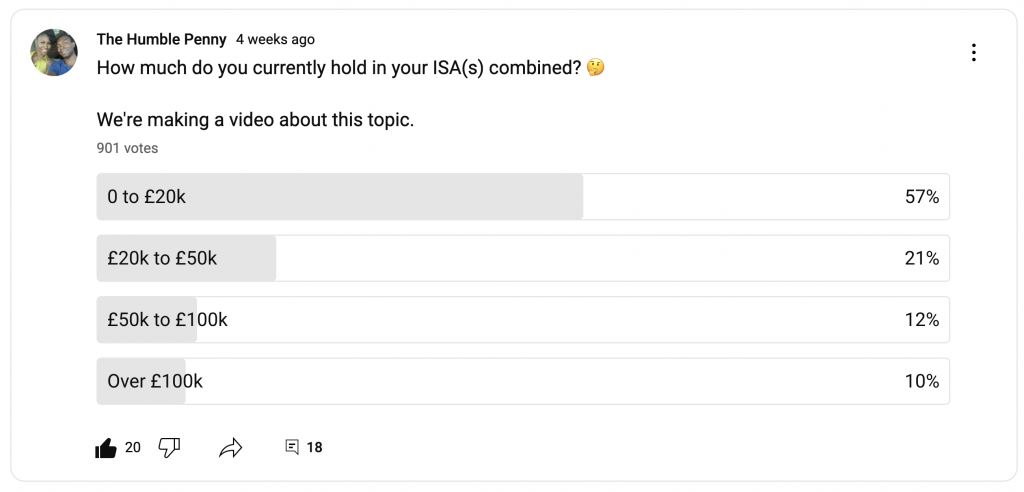
ISA millionaires

This tells us that there are clearly other factors at play e.g. income levels, money habits/behaviours and age differences.

👉🏽Need 121 help to invest smartly in your ISA? Book a coaching session with us here.

How Long Does It Take To Become an ISA Millionaire?

According to data obtained following a freedom of information (FOI) request:

It takes them an average of 22 years to become ISA millionaires.

This tells us straight away that most ISA millionaires are older than people who typically read our posts but it’s also very encouraging to think that the average time taken to become an ISA Millionaire is 22 years!

We ran a scenario on a compound interest calculator to see what average investment return is needed to achieve a £1m ISA in 22 years assuming you max out £20k a year, which is equivalent to around £1,667 per month.

Obviously, most people won’t be able to do this, but we thought it was an interesting insight to learn.
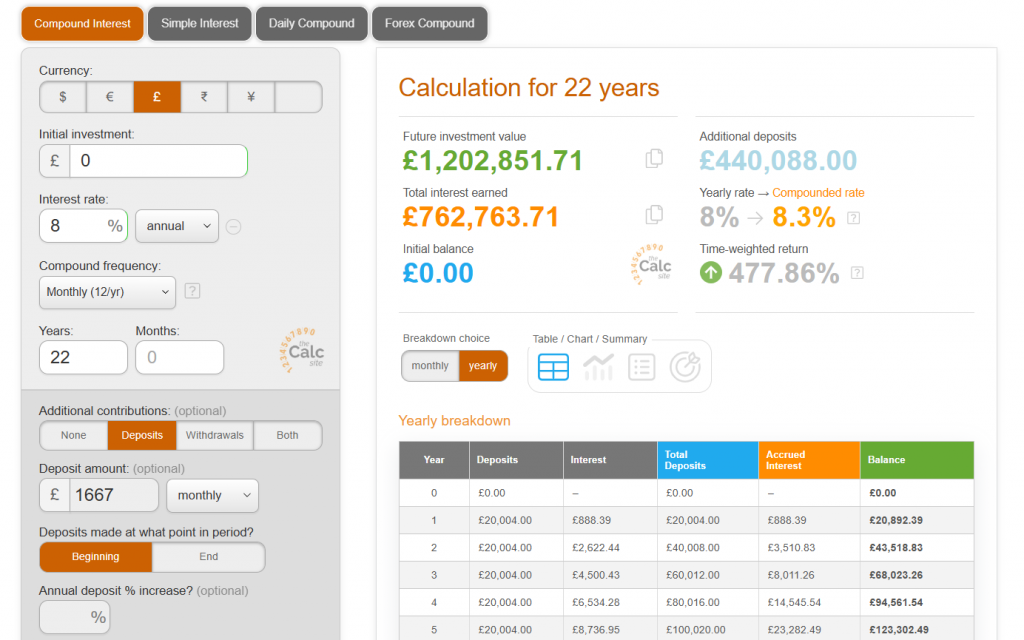
 

We learned that you’d need your investments to generate around an average of 8% return per year for your £20k annual investment to reach £1.2m in 22 years, even if you started with Zero today.

So someone who is aged 30, for example, would have a £1.2m portfolio by the age of 52.

But note that due to inflation, to get the purchasing power of £1m today, you’d need around £1.9m assuming 3% inflation rate.
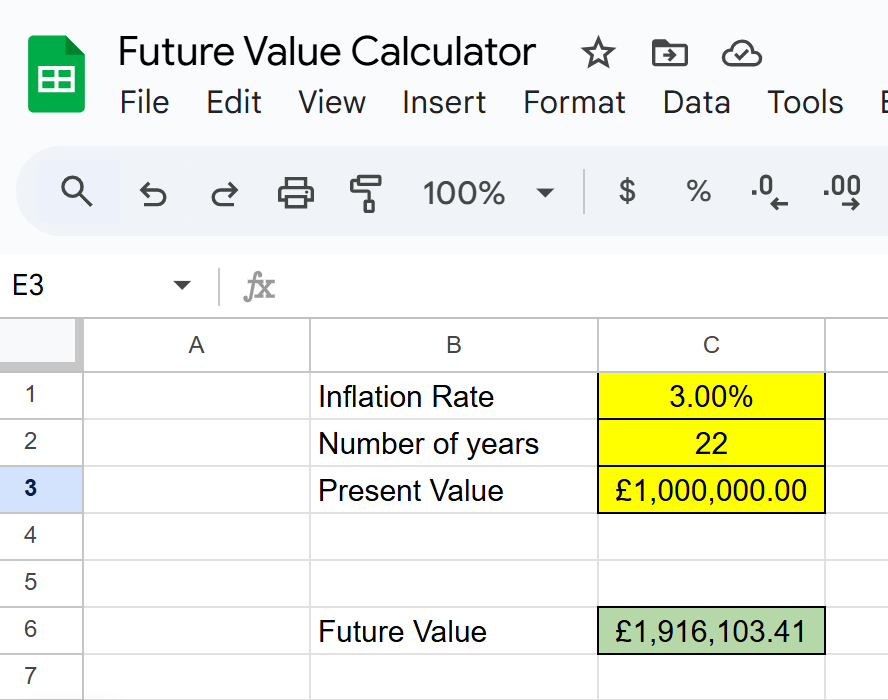
This implies a need to invest more or get a higher investment return on your money.

But remember, you don’t need a million pounds or dollars to feel wealthy or successful!

Who Are ISA Millionaires?

You might be picturing city bankers, but the average age of an ISA millionaire is actually 73.

And while most are older, there are a few in their 30s and even one in their 20s!

This implies that those in their 20s and 30s got lucky with investing in some individual stocks.

We definitely do not recommend waiting until the age of 73 in order to enjoy your money.

Balance is important, and this is why we wrote our book, Financial Joy, to help you stop worrying about money and start enjoying your future while being confident that you’re working towards financial independence in the years ahead of you.

We looked after our finances for years, prioritising investing, and as a result of that, it has helped to create time and financial freedoms in our lives. Please do what works for you! 

The stats on ISA millionaires also show a gender gap: about 67% are men, 33% are women.

This specific data comes from Interactive Investor and could differ for other platforms.

Are you enjoying this post so far? Please take a moment to comment and share it with others.

What Makes an ISA Millionaire?

So, what’s their secret? Here are some traits and habits that set ISA millionaires apart:

  • Start early: Time is their greatest ally, harnessing the power of compounding growth.
  • Clear goals: Almost all ISA millionaires set a specific target and a deadline for reaching it.
  • DIY investors: Most make their own investment decisions rather than relying on advisers, who, statistically, underperform the market. This also keeps fees low.
  • Consistency: They contribute regularly, often increasing their amounts as their income grows.
  • Long-term: They don’t worry about the short-term noise

How Do ISA Millionaires Invest?

Here is some data on this from Interactive Investor:
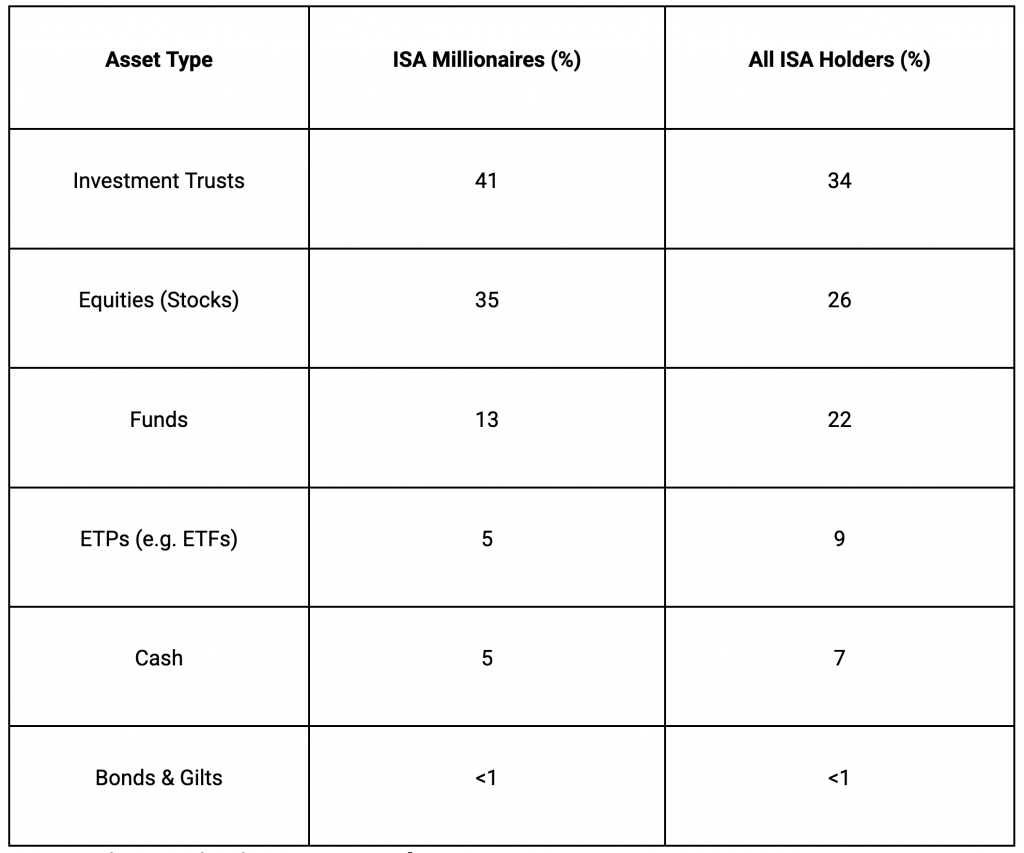
As expected, a big proportion of their investments are in stocks, funds and ETFs.

We were really surprised by the fact that 41% of their investments were in Investment Trusts.

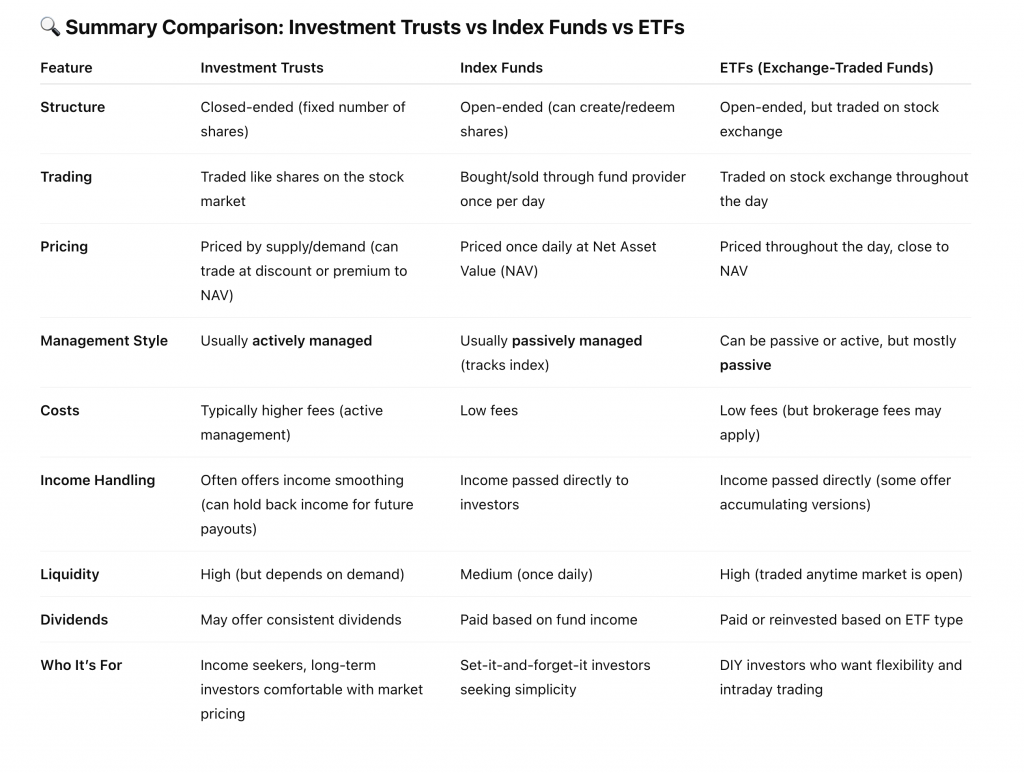
If you’re wondering how Investment Trusts compare to Index Funds and ETFs, below is a side-by-side comparison:
ISA millionaires
Investment Trusts vs Index Funds vs ETFs. Source: The Humble Penny

Notice also how cash is less popular among millionaires—they focus on growth assets like stocks, Index Funds/ETFs and investment trusts.

This implies that they kept around 5% in a cash ISA and the rest in a Stocks and Shares ISA.

There has been a lot of debate in the UK about cash ISAs vs Stocks and Shares ISAs.

Both have a place on the wealth-building journey.

For us, beyond keeping an emergency fund in a cash ISA, investing via Stocks and Shares ISAs and Lifetime ISAs has been a complete game changer.

In addition to the asset classes mentioned above, we have data from Hargreaves Lansdown on how ISA Millionaires invest geographically:
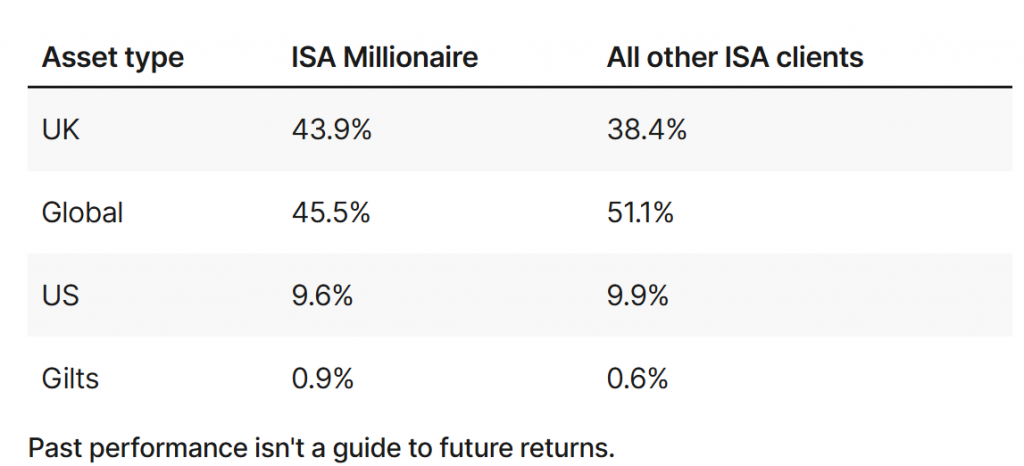
 

Again, we were surprised to see that a large 43.9% of their investments were in the UK and only 9.6% in the US.

However, 45.5% is invested globally, and a large proportion of that will be US exposure. 

This says a lot and possibly points to a generational difference.

Given the average age is 73, it’s likely these millionaires started investing in the UK when the economy was doing well and perhaps have stuck with it. 

What do you guys think? Jump in the comments and let us know.

Here’s an unusual insight: 32% of ISA millionaire contributions in the last year were made in just one month—April, right after the new tax year started.

Early birds really do get the worm!

And get this: the ISA allowance has always been capped, currently at £20,000 a year, so it’s not about dumping huge sums in at once.

It’s about maximising that allowance every year, consistently.

Read: Should I Get a Stocks and Shares ISA Today?

Why Building Your ISA Is More Important Than Ever

Before we dive into the action steps, let’s talk about why building your ISA is more important than ever.

With AI and automation advancing rapidly, millions of UK jobs, especially in routine or entry-level roles (and increasingly more professional jobs) are at risk of being automated.

Even the government estimates that up to 30% of jobs could be impacted by 2030. 

That means job security isn’t what it used to be, and relying on a single source of income is riskier than ever.

And it’s not just about job security.

With the UK facing structural and economic changes and increasing uncertainty, having a well-funded ISA gives you something incredibly valuable: freedom and flexibility. 

If you ever decide or need to move abroad, you can keep your ISA open and continue to enjoy tax-free growth on your investments, even as a non-UK resident.

You won’t be able to add new money while living abroad, but your existing ISA stays protected from UK tax, and you can transfer it between providers if you wish.

That’s a powerful safety net.

It means you’re not tied to one country’s fortunes or policies.

Your ISA can help you take control of your financial future, wherever life might take you.

So, let’s talk about what you can do today to protect your future…

Action Steps—How You Can Start Your ISA Investing Journey

Ready to start your own journey? Here’s what you can do:

  • Start now, no matter your age or income. Even small amounts, invested early, can grow significantly thanks to compounding.
  • Max out your ISA allowance if you can: that’s £20,000 per year.
  • Increase your contributions over time, especially after pay rises or windfalls.
  • Focus on growth investments, consider stocks, investment trusts, and funds (e.g. index funds and ETFs).
  • Set a clear goal. Write down your target and a deadline.
  • Review your investments regularly, but don’t be tempted to overtrade.
  • Educate yourself. DIY investors tend to do better, so learn the basics and take control.

If you’re serious about becoming an ISA millionaire or just want to take control of your financial future, while learning directly from us and our community of Dream Makers, we invite you to join us at Financial Joy Academy.

It’s a step-by-step membership platform we created to help motivated people like you build financial freedom faster.

You’ll instantly get to:

  • Join us daily for our Lunch Time Club,
  • Access ALL our practical classes,
  • Follow our tailored step-by-step Success Paths,
  • Get group coaching from us every 2 weeks,
  • Join our supportive community of Dream Makers, and
  • Get an Accountability Partner to keep you on track.

We’ve been where you are now, and FJA is designed to guide you every step of the way.

Whether you’re just starting or already investing, or you simply want to learn how to make extra money from a side hustle in tried and tested ways.

If you want to stop feeling overwhelmed and start making real progress, this is exactly what you need.

We look forward to welcoming you to our community of Dream Makers.
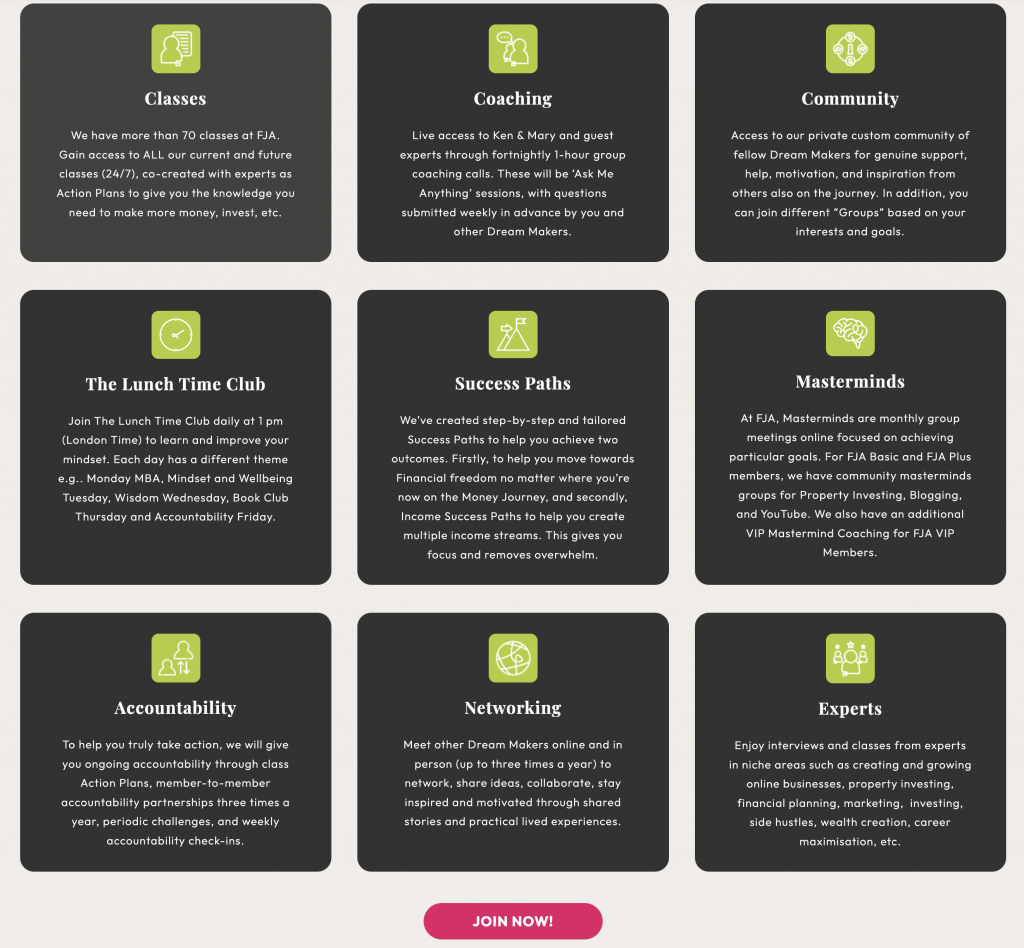
ISA millionaires
9 ways we help you at Financial Joy Academy (FJA). Click to Join Now.

Conclusion

Becoming ISA millionaires is possible for us, too, and it's not too late! Start small 😀

You may have less than £20k in your ISA now; however, see this post as inspiration for what's possible.

Focus on your why for investing 📈.

For us, it's optionality and time freedom with each other and our children. What is your why?

👉🏽 If you need 121 help to invest smartly in your ISA, Book a 121 coaching session with us here.


Is becoming an ISA millionaire something you think is possible for you one day? Jump in the comments and let us know.


Don’t go anywhere, check out these next posts to help you on your investing and ISA millionaire journey:

  • Read The Wealth Habit book
  • Invest This in an ISA to Make £2,000 Monthly Passive Income (Tax-Free!)
  • Work Smarter, Not Harder: 8 Wealth Strategies
  • How to Make It In the UK (Even When It Feels Impossible)

Frequently Asked Questions

Here are some frequently asked questions.

1) What is an ISA?

An ISA stands for an “Individual Savings Account” with tax-free benefits.

There are 4 types of Individual Savings Accounts (ISA):

  • cash ISA
  • stocks and shares ISA
  • innovative finance ISA
  • Lifetime ISA

You don't pay any tax on:

  • interest on cash in an ISA
  • income or capital gains from investments in an ISA

If you're reading from America, the nearest US version of a UK ISA is the Roth IRA.

2) Do you know how many of the ISA millionaires had PEPs that they transferred/converted into ISAs? 

Great question! We've been asked this before, and unfortunately, we don't know how many had PEPs.

3) Does the average of 22 years capture that fact? Given the annual ISA limit was much lower than £20k pa for most of the last 22 yrs, their returns far exceeded 8% per annum – that must have been down to some good/lucky stockpicking, rather than just holding passive ETFs?

It's implied that a number of them had individual stocks that did well over time.

But what we don't know is how many lost money from doing the same, and hence isn't reported in the headline numbers.

4) What are the data sources?

They come from a combination of research by various investing platforms and freedom of information requests. Here are the links:

Interactive Investor – How ISA millionaires invest

Hargreaves Lansdown – Where ISA millionaires invest

Money Week – Stats on ISA millionaire growth


Here is a full video version of this post on ISA millionaires:


Thanks again for reading, guys. And as always, in all things, be thankful and seek joy! 💛

How To Make It In the UK (Even When It Feels Impossible!)

May 7, 2025 by The Humble Penny 0 Comments

Making it in the UK today feels tougher and more expensive than ever before.

The economic landscape is challenging, the cost of living is rising, and many people feel the system is stacked against them.

Many are so fed up that they've left or are considering leaving the UK. Some don't want to leave or can't, and need a way to make it.

The same economic challenges apply to other countries like Canada, Australia, the US, and a lot of countries in Europe etc.

Yet, despite these hurdles, it’s still possible to build a life of financial freedom and personal fulfilment in the UK.

With the right mindset, habits, skill set, and strategies, you can successfully navigate this environment.

In this comprehensive guide, I’ll walk you through a step-by-step process to help you make it in the UK.

I'll draw from my experience of having achieved financial freedom in the UK.

Plus, experience as a chartered accountant, former CFO, financial coach, business coach, and Sunday Times bestselling author of Financial Joy.

I’ll share practical advice, insights, and strategies that can empower you to thrive even when it feels impossible.

♻️Take a moment to comment with your thoughts and share this post on WhatsApp, etc, with others who need it.

making it in the uk
 “Making it” for us means having enough income from investments to cover reasonable lifestyle expenses, leaving room to help others. Although we're enjoying the fruits today, it took patience and sacrifice to get there.

Table of Contents

Toggle
  •  
  • 📝 What Does “Making It” Mean To You? 
  • 🌍 1. Understanding the Current UK Landscape
  • 💡 2. Live Below Your Means but Think Above Them
  • 💻 3. Get a Side Income and Make It Digital
  • 💷 4. Use Tax-Efficient Accounts to Build Wealth
  • 💷 5. Starting a Micro Limited Company
  • 🔄 Why Diversification Is Vital
  • ⛰️ 6. Avoid Tax Cliff Edges and Keep Your Benefits
  • 🏠 7. Renting or Owning: Make It Work for You
  • 🤝 8. Build a Network That Opens Doors
  • 📚 9. Learn Fast and Learn for Free
  • 🌏 10. Consider a Hybrid Life
  • Conclusion
  • ❓ Frequently Asked Questions (FAQ)
  • Is it really possible to make it in the UK despite the economic challenges?
  • What are some practical ways to create additional income in the UK?
  • How can I use tax-efficient accounts to grow my wealth?
  • What are tax cliff edges, and how do they affect me?
  • Is owning a home essential to making it in the UK?
  • Why is building a network important?
  • How can I keep learning without spending a lot of money?
  • What is a hybrid life, and how can it help me?


📝 What Does “Making It” Mean To You? 

Before we jump in, it is important to be clear on a few questions:

  • What do you really want out of life? And what does “making it” truly mean to you?
  • Are you prepared to be open-minded and get out of your way?
  • Do you accept that you must make painful sacrifices to achieve it?

Pause for a moment, reflect on write down some thoughts. 

Without doing this, you'd just be reading and wouldn't have anything to apply the learning to.

🌍 1. Understanding the Current UK Landscape

To begin, it’s crucial to understand the economic and social landscape of the UK today.

The UK economy is currently quite flat, with projections indicating a decline in GDP this year and only gradual improvement expected over the coming years.

Inflation remains stubbornly high (in reality), growth is stagnant, and the economy is experiencing a form of stagflation—a combination of inflation and low growth.

People are feeling the pinch.

Energy bills are soaring, food costs remain high, council tax is increasing, and homeownership is becoming a distant dream for many.

Rents in major cities are sky-high, making it even harder for people to climb onto the property ladder.

The job market is also undergoing rapid change, largely driven by automation and artificial intelligence (AI).

While AI promises to reshape the future of work, many people have yet to see the benefits; instead, uncertainty and job insecurity are rising.

It often feels like opportunities are disappearing, but I believe they are not gone—they are simply moving.

To make it in the UK, you need to be ready to move and shift with the times to seize these evolving opportunities.

Moreover, the general mindset in the UK can sometimes feel negative or scarcity-driven.

While not everyone feels this way, it’s important to consciously balance this by fostering a positive, abundance-focused mentality.

This mental shift is essential for long-term success and resilience.

Recommended: You've Been Trained To Be Poor (10 Shocking Money Traps!)

💡 2. Live Below Your Means but Think Above Them

This might sound like an obvious piece of advice, but it’s one of the most critical foundations of financial success in the UK.

Living below your means means spending less than you earn, but thinking above your means means aiming higher—planning, strategising, and building a buffer for the future.

Let me illustrate with an example:

  • Tom earns £40,000 per year but spends £38,000.
  • Sarah earns £30,000 but spends only £25,000.

Who do you think will be wealthier five years from now, assuming they invest the difference?

The answer is Sarah, every time.

Even though she earns less, her disciplined spending and the margin she creates between income and expenses build freedom and wealth over time.

The key action here is to audit your expenses carefully.

Be intentional about your spending, focus on value rather than status symbols, and cut out unnecessary status-driven expenses.

This approach helps you control your money rather than letting lifestyle inflation eat up your gains as your income rises.

This “zero lifestyle inflation” rule means as your income grows, your lifestyle spending should remain roughly the same.

This discipline will be even more important as economic pressures continue and systems become more challenging worldwide, not just in the UK.

💻 3. Get a Side Income and Make It Digital

Relying on a single income source is increasingly risky in today’s uncertain job market.

You might have a job one day and be facing redundancy the next.

Data from Finder shows that nearly two in five Brits (39%) now have at least one side hustle to supplement their income.

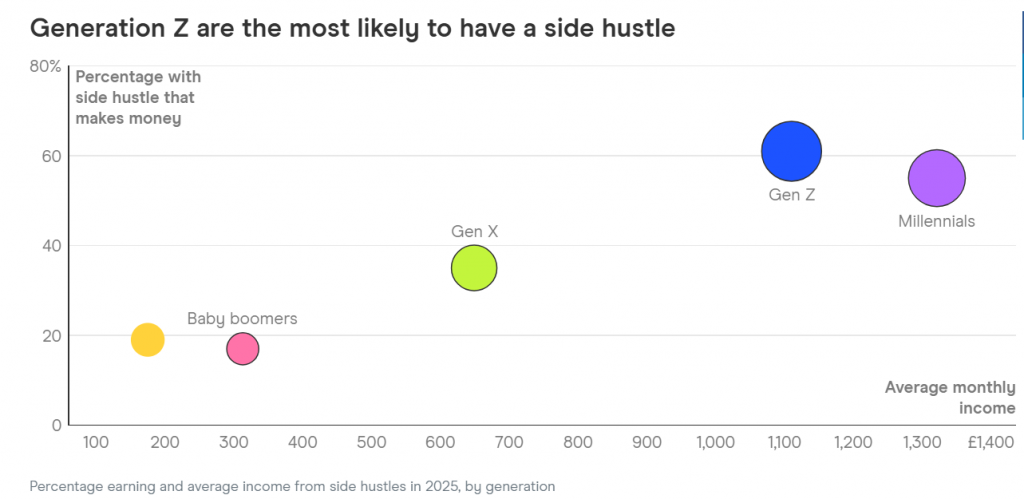
On average, people earn around £914 per month from side hustles, with younger generations leading the way: 60% of Gen Z and 58% of Millennials are involved in some form of side income.

The types of side hustles vary widely, but five popular categories stand out:

  1. Selling old or refurbished items: You can find these around your home or buy and refurbish them to sell for profit.
  2. Creating content: Running YouTube channels, blogs, TikTok accounts, newsletters, and more.
  3. Creating and selling products: Handmade goods on platforms like Etsy.
  4. Secondary part-time jobs: Driving for Uber, working in retail or hospitality, etc.
  5. Manual labour: Various hands-on jobs or services.

Many creators are even producing faceless content using AI voiceovers and stock footage, which allows them to generate income without revealing their identity.

Alongside building a side income, it’s essential to build a personal or professional brand.

In a digital-first economy, attention is leverage—people need to know who you are and what value you bring.

Whether you’re employed, self-employed, or entrepreneurial, your reputation and visibility can open doors to new opportunities.

LinkedIn is a must for professionals, but other platforms like TikTok, YouTube, and Instagram also offer avenues to showcase your expertise and build a following.

Your personal brand acts as a hedge against job loss or career changes by creating alternative income streams and opportunities.

For example, if you’re an accountant, sharing tax tips on TikTok or YouTube can help you attract clients and establish credibility.

The key is to be consistent and authentic in your content and interactions.

💷 4. Use Tax-Efficient Accounts to Build Wealth

One of the smartest ways to make it in the UK is to keep more of what you earn by using tax-efficient accounts.

These legal tools allow you to grow your money without losing large chunks to taxes.

Here are the key accounts everyone should know about:

  • Individual Savings Accounts (ISAs)

Every adult in the UK has an annual ISA allowance of £20,000, which resets every tax year (6th April to 5th April).

Couples can combine their allowances for a total of £40,000.

Stocks and Shares ISAs let you invest in the stock market without paying tax on dividends or capital gains.

This is a powerful way to build wealth over time, especially if you invest in globally diversified index funds or ETFs (Exchange Traded Funds).

Using ISAs to invest tax-free

Don’t let market uncertainties deter you.

Investing is a long-term game, and spreading your investments globally helps reduce risk.

  • Lifetime ISA (LISA)

For those aged 18 to 39, a Lifetime ISA allows you to save up to £4,000 per year, with the government adding a 25% bonus (up to £1,000 annually).

The funds can be used to buy your first home or saved for retirement (accessible at age 60).

  • Junior ISA

If you have children or plan to, Junior ISAs are a fantastic way to start building wealth for their future.

You can invest up to £9,000 per year tax-free on behalf of your child.

Teaching children financial literacy and investing skills early helps break cycles of financial illiteracy.

  • Pensions

Pensions offer tax relief on contributions, making them one of the most tax-efficient ways to save for retirement.

However, the state pension age is rising, and pensions have limited accessibility and flexibility.

Only 25% of pension funds are tax-free, and recent changes mean pensions are now included in inheritance tax calculations.

Depending on your goals—whether early retirement or later life security—you’ll want to prioritise different accounts.

Our book Financial Joy covers this in detail (pages 288 to 292), helping you decide the best investment order for your circumstances.

Recommended: The Complete Guide to Pensions

💷 5. Starting a Micro Limited Company

Running a micro limited company as a side hustle can help you earn extra income while building wealth.

You can contribute up to £60,000 per year per person into a pension from your company, which is tax-deductible.

You can also pay yourself dividends, which are taxed more efficiently than salary.

Additionally, you can employ your spouse or teenage children in your business to distribute income legally within your household, keeping wealth circulating among family members.

Recommended: How to Pay Yourself Tax Efficiently From Your Business

🔄 Why Diversification Is Vital

Diversification is a fundamental investing principle.

While stock markets may fluctuate, especially with current global trade tensions and tariffs, diversifying your investments across asset classes and geographies can protect your wealth.

For example:

  • Gold is often considered a doomsday investment, preserving value, though it doesn’t generate income.
  • Property investments, including flipping, HMOs, commercial real estate, or international properties, offer alternative income streams and capital appreciation.

During a recent trip to East Africa, I met investors from the US exploring international property investments and Airbnb opportunities.

We also have some friends who gradually invested in 4 x Airbnb properties in Kingston, Jamaica.

This kind of diversification spreads risk and can provide stable income even when one market is turbulent.

⛰️ 6. Avoid Tax Cliff Edges and Keep Your Benefits

The UK tax system contains several “cliff edges” where earning just over a certain threshold causes you to lose benefits or allowances abruptly.

These cliffs can discourage people from increasing their income and hurt productivity.

Here are some key cliff edges:

  • Child Benefit: Starts to reduce if you or your partner earns over £60,000, and stops entirely at £80,000.
  • Personal Allowance: Lost gradually if your income exceeds £100,000, disappearing completely around £125,140, resulting in an effective tax rate of 60% at that level.
  • Free Childcare Hours: Eligibility for 30 hours free childcare is lost if one parent earns over £100,000.

The solution to avoiding these cliffs is salary sacrifice, where you reduce your gross salary by contributing more to your pension or other benefits, effectively lowering taxable income to keep your allowances intact.

For example, if you earn £70,000 but want to keep full child benefit, you might sacrifice £10,000 into your pension to reduce taxable income to £60,000.

However, salary sacrifice isn’t always feasible if your lifestyle costs are already high.

The structure of these cliffs can discourage ambition, causing people to cap their earnings and limit career progression, which ultimately harms UK productivity and economic growth.

🏠 7. Renting or Owning: Make It Work for You

Owning your home outright has huge benefits, including no rent payments in retirement and exemption from capital gains tax on your main residence.

We paid off our mortgage in 7 years, which was challenging but rewarding, freeing our income for investing and experiences like travel.

Recommended: How We Paid Off Our Mortgage In 7 Years

However, not everyone can own a home, and for many, it feels out of reach.

If you’re renting, there are strategies to make it work for you:

  • House Hacking: Rent out a room (with permission) to reduce your housing costs.
  • Co-living: Share housing and bills with friends or others to save money.
  • Geo-Arbitrage: Consider living in lower-cost areas like Yorkshire, Wales, or Scotland while earning a salary from a higher-cost city like London.

It's worth pointing out that moving to areas that are not ethnically diverse can be a challenge for people of colour due to potential racism.

So while these approaches require imagination and flexibility, especially with the trend back to office-based work, they also require some bravery.

You might need to switch jobs or create your own opportunities through side hustles or businesses to maintain this balance.

Most importantly, save the difference you’re able to cut from housing costs and invest it to build wealth over time.

🤝 8. Build a Network That Opens Doors

Having the right network can be a game-changer.

One introduction can lead to a higher-paying job, a new client, a speaking opportunity, or a business partnership.

Many jobs and opportunities in the UK never get advertised publicly and are accessed through private networks and relationships.

Here’s how to start building your network:

  • Attend free local business or startup events (check Eventbrite).
  • Use LinkedIn to connect with and learn from people who inspire you.
  • Volunteer for causes that align with your goals to meet like-minded people.
  • Join online communities focused on your interests or career.

We run the Financial Joy Academy, a supportive community where members (called Dream Makers) work towards financial and business goals together.

We offer a daily Lunch Time Club, over 70 classes, a tailored step-by-step Success Path, in-person networking, accountability partnerships and mindset coaching to help members grow, etc.

📚 9. Learn Fast and Learn for Free

There is a wealth of free learning resources available today, including YouTube, Coursera, FutureLearn, Skillshare, podcasts, audiobooks, and local libraries.

However, consuming content passively won’t change your life.

Every time you learn something new, ask yourself: What is my next best step? What action will I take in the next 24 hours to move forward?

This might be consulting a financial adviser, reviewing your budget, starting a side hustle, or simply discussing your goals with your partner.

Knowledge alone is not enough; action is essential.

Balance free learning with access to paid services or communities that provide accountability and deeper engagement.

This combination can accelerate your progress.

🌏 10. Consider a Hybrid Life

Finally, consider designing a hybrid lifestyle that blends the benefits of living in the UK with the freedom to explore and experience new environments.

I’m currently in East Africa with my wife, experiencing Kenyan culture, something I wouldn’t have done without intentional life design.

Travel and changing your environment can refresh your mindset, spark creativity, and improve your overall quality of life. It’s about living fully, not just surviving.

We plan our travel carefully, saving in advance and using points and companion vouchers to keep costs low.

We use this specific card to collect Avios points for travel.

Over the years, we’ve visited 35 countries, gradually increasing the time we spend abroad each year.

Making it in the UK doesn’t mean you have to be confined to one place or a single way of living.

You can create a life that suits your dreams, whether that means regular travel, remote work, or a different lifestyle balance.

While the UK has its frustrations, it also offers incredible benefits like citizenship freedoms, access to nature, culture, and major cities.

By shifting your mindset from scarcity to abundance and taking deliberate steps, you can create a life you love.

We loved visiting Diani Beach, Kenya. We took the local boats called dhows to a sandbank in the middle of the Indian Ocean to snorkel. This is part of what hybrid life looks like for us.


Conclusion

Making it in the UK might feel impossible at times, but it’s far from unattainable.

A lot of us require a shift from a victim mentality to a fighting mentality to make it. Let the fighter in but don't lose your soul on the journey.

By understanding the current landscape, living below your means (driven by the right money habits), diversifying income, investing tax-efficiently, avoiding tax cliffs, building strong networks, committing to continual learning, and designing a hybrid life, you can create the future you desire.

Remember, success is a combination of mindset, habits, knowledge, and action.

Start with small steps today, and over time, you’ll build momentum toward financial freedom and personal joy.

As always, be thankful and seek joy in all things. Your journey to making it in the UK and beyond starts now.

More resources to help you with how to make it:

  • Get Coached By Me 1-to-1. No BS. Only Results.
  • Work Smarter, Not Harder (8 Wealth Strategies To Start Today)
  • 10 Things I Quit To Regain My Freedoms.

❓ Frequently Asked Questions (FAQ)

Is it really possible to make it in the UK despite the economic challenges?

Yes.

While the UK economy and job market face challenges…

With the right mindset, financial habits, and strategies like living below your means, building side incomes, and investing tax-efficiently, you can still build wealth and a fulfilling life.

What are some practical ways to create additional income in the UK?

Popular side hustles include selling refurbished goods, creating content on platforms like YouTube, Instagram or TikTok, leveraging AI, selling handmade products, part-time jobs, and offering services like tutoring or coaching.

Building a personal brand online can also open up new opportunities.

How can I use tax-efficient accounts to grow my wealth?

Utilise ISAS (Individual Savings Accounts), Lifetime ISAs, Junior ISAs for children, and pensions to invest and save money tax-free or with tax advantages.

Starting a micro limited company can also offer additional tax benefits.

What are tax cliff edges, and how do they affect me?

Tax cliff edges are income thresholds where you start losing benefits like child benefit or personal allowances.

Crossing these cliffs can result in high effective tax rates and loss of benefits. Salary sacrifice into pensions can help manage income to stay below these cliffs.

Is owning a home essential to making it in the UK?

Owning a home has clear advantages, including no rent in retirement and capital gains tax exemption on your main residence.

However, if owning isn’t feasible, strategies like house hacking, co-living, and geo-arbitrage can help renters save and invest effectively.

Why is building a network important?

The right network can open doors to job opportunities, clients, partnerships, and advice that are not publicly advertised.

Attending events, engaging online, volunteering, and joining communities can help you build valuable connections.

How can I keep learning without spending a lot of money?

Take advantage of free resources like The Humble Penny blog, YouTube, online courses, podcasts, and libraries.

The key is to apply what you learn by taking consistent action.

Joining affordable paid communities like Financial Joy Academy that offer accountability and a tailored step-by-step Success Path can further accelerate your progress.

What is a hybrid life, and how can it help me?

A hybrid life combines living in the UK with spending time abroad or in different environments.

It refreshes your mindset, broadens your experiences, and can improve your overall well-being. Careful planning and saving make this lifestyle achievable.

Work Smarter, Not Harder: 8 Wealth Strategies To Start Today

April 30, 2025 by The Humble Penny 2 Comments

Work Smarter, Not Just Harder: The Real Secret to Building Wealth

Have you ever felt like you're working harder than ever but still not getting ahead financially?

If so, you're not alone.

The truth is, hard work alone won't make you wealthy.

There's a secret that the wealthy have mastered: they work smarter, not just harder.

In this blog post, we'll break down exactly how working smart looks in real life, backed by practical examples and action steps you can apply today.

Whether you're based in the UK, the US, or anywhere else, these strategies will help you shift your mindset, build assets, and set yourself on the path to financial freedom.

Read with an open mind and remember to start small.

♻️Save this post as a checklist and share it with others. Let's dive in.

work smarter not harder
 

Table of Contents

Toggle
  • Work Smarter, Not Harder: 8 Wealth-Building Strategies You Can Start Today
  • 1. Make Money Work for You, Not the Other Way Round
  • 2. Focus on Buying or Building Assets That Compound
  • 3. Optimise for Tax Efficiency
  • 4. Value Time Over Money
  • 5. Build or Buy Systems That Work Without You
  • 6. Leverage Other People's Time and Talent
  • 7. Use Technology to Scale Effortlessly
  • 8. Apply Working Smart to Your Career
  • Conclusion

Work Smarter, Not Harder: 8 Wealth-Building Strategies You Can Start Today

👉🏽Let's start with examples that are Personal Finance related:

1. Make Money Work for You, Not the Other Way Round

One of the first mindset shifts the wealthy adopt is making their money work for them instead of trading time for money endlessly.

  • Real-life examples:

↳ Dividend-Paying Stocks and ETFs: Instead of stashing all their cash in savings, they invest in dividend-paying shares or low-cost index funds that grow over time and generate passive income.

↳ Rental Properties: They buy properties (locally or internationally) that are tax-efficient and generate rental income, often using smart strategies to maximise returns.

↳ Investing in Businesses: Some invest in businesses managed by others, receiving dividends without daily involvement.

↳ Using Debt as Leverage: They use “good debt” to magnify their returns, such as securing mortgages for rental properties.

  • Action Step: Start by investing small amounts consistently in a diversified index fund.

Automate your investments to build the habit without needing constant attention.

If most people take this first action step, they'll be on their way towards creating some level of wealth over time.

Recommended: 8 Investments You Must Have By Age 45

2. Focus on Buying or Building Assets That Compound

Wealthy people build or buy assets that grow exponentially over time.

  • Real-life examples:

↳ Writing a Book: One-time effort, long-term royalties.

↳ Building an Online Platform: A blog, YouTube channel, course or online platform (where you own the IP) that earns recurring income.

↳ Buying a Business: Acquiring a small business that operates independently.

Wealthy people prefer asset creation over constantly selling their time or services.

  • Action Step: Think about what you can create this year, e.g. a digital product, a book, creating a digital business, etc, that can earn you income long after the initial effort. 

👉🏽If you don't know where to start, we can help.

3. Optimise for Tax Efficiency

It’s not just what you earn; it’s what you keep.

The wealthy are experts at keeping more of their earnings by using legal tax strategies.

  • Real-life examples:

↳ Tax Wrappers: They invest using ISAs, SIPPs, or a SASS pension in the UK, or Roth IRAs and 401(k)s in the US.

↳ Venture Capital Trusts (VCTs): They explore tax-efficient investment vehicles that offer incentives.

↳ EIS and SEIS Schemes: Many founders and entrepreneurs use the Enterprise Investment Scheme (EIS) and Seed Enterprise Investment Scheme (SEIS) to raise capital.

Investors benefit from significant tax reliefs, including income tax relief and exemption from capital gains tax on profits.

Wealthy individuals invest in these schemes not only for growth potential but also to reduce their tax liabilities dramatically.

↳ Global Capital Movement: They manage their capital across borders for optimal tax treatment.

It has been reported that thousands of millionaires have left the UK recently and continue to as the environment becomes less favourable for them.

In our own experience, it's not just the millionaires that have left or are considering leaving, it's everyday people.

So the ability to have capital that you can move is increasingly an advantage.

  • Action Step: Speak to a qualified financial advisor or tax specialist to review how tax-efficient your investments are.

Start with the basics, like maxing out your ISA (tax-free and easily accessible) or retirement account contributions.

Then, consider exploring opportunities like EIS and SEIS if you are eligible.

Recommended: Leaving The UK? Here's What Happens To Your Assets and Investments

4. Value Time Over Money

While many chase money, the wealthy fiercely protect their time because they know time, once lost, cannot be regained.

  • Real-life examples:

↳ They'd happily pay £100 for a cleaner, knowing that 5 hours saved could generate £1,000s more in strategic thinking or opportunity creation.

↳ Delegating admin tasks so they can focus on strategy and growth.

They constantly ask: “What's the best use of my time?” 

  • Action Step: Identify one low-value task you currently do weekly and outsource it. Use that saved time to work on a project that could build long-term wealth.

👉🏽Here is an example of work smarter vs work harder that's business-related:

5. Build or Buy Systems That Work Without You

The wealthy don't rely on daily manual effort.

They create or invest in systems that work while they sleep.

  • Real-life examples:

↳ Digital Products with Automated Sales Funnels: An ebook, course, or template with a backend email system that sells automatically.

↳ Outsourcing Logistics: Using warehousing and fulfilment teams instead of packing and shipping goods themselves.

  • Action Step: Set up one automated system for your business or side hustle this month, whether that's an email sales funnel or outsourcing fulfilment to a third-party provider.

6. Leverage Other People's Time and Talent

Trying to do everything yourself is a fast track to burnout, not wealth.

  • Real-life examples:

↳ Hiring specialists like accountants, virtual assistants, or developers.

↳ Building a team that complements your skills and frees you up to make strategic decisions.

For example, we have a small team of virtual assistants, designers/developers, video editors and social media assistants.

All these people are freelancers and based in places like Ghana, Ukraine, UK, and Bangladesh.

Creating this team required a mindset shift on our end.

Without them helping us, we can't possibly free ourselves up to focus on the most value-adding activities.

  • Action Step: Make a list of tasks draining your energy. Then hire a freelancer or VA to handle one or two tasks.

7. Use Technology to Scale Effortlessly

Smart people leverage technology to spread their message and products far and wide.

  • Real-life examples:

↳ A single YouTube video educating thousands of viewers.

↳ A social media post that sells digital products or attracts brand deals.

↳ Using scheduling tools, automation software, and digital marketing to reach audiences 24/7.

  • Action Step: Choose one piece of content this week and distribute it across multiple platforms (e.g., turn a blog post into social media snippets, videos, email newsletter content, etc). 

AI tools can also help to compound your efforts.

👉🏽Here is an example of work smarter vs work harder that's career-related:

8. Apply Working Smart to Your Career

Working smart isn't limited to business or investing — it applies to your 9-to-5 career, too.

  • Real-life examples:

↳ Networking: Building relationships within your company to open doors.

↳ High-Impact Projects: Focusing on work that aligns with company goals and showcases your value.

↳ Automation: Using tools to automate repetitive tasks, freeing up time for innovation.

  • Action Step: Identify a high-visibility project in your company and find a way to get involved. It could fast-track your next promotion.

Conclusion

Working smarter, not harder, is ultimately about a mindset and habit shift, and doesn't happen overnight.

Building wealth is not about abandoning hard work altogether.

It's about combining hard work with smart strategies to make your efforts go further.

Hard work gives you credibility. Working smart multiplies your results.

Remember, this transformation doesn't happen overnight.

It’s about consistent, small shifts that, over time, produce massive results 😀.

Want help building assets, working smarter, and creating financial freedom faster?

Join Financial Joy Academy — our global membership community designed to help you grow your income, build wealth, and live life on your own terms. Get coaching from us, community support, and step-by-step Success Paths to fast-track your goals.

Your future wealthy self will thank you!

What else would you add to the list? Which of these 8 strategies will you be implementing? Comment below?

You’ve Been Trained To Be POOR! (10 Shocking Money Traps)

April 18, 2025 by The Humble Penny 4 Comments

Most people don’t even realise it… But you’ve been trained to be poor.

Since childhood, from school to society, you’ve been conditioned to follow a system that keeps you broke, on purpose.

But today, we’re exposing the 10 hidden ways you’ve been trained to be poor—and, more importantly, how to break free from them!

If you feel like you’re working hard but still struggling financially, it’s NOT your fault.

The truth is, we’ve all been taught habits and beliefs that keep us poor.

We’ll be counting down from number 10, so do make sure you stay tuned until we reach number 1.

We’d also appreciate you taking a moment to share this post and help others begins to shift their mindsets.

poor

Table of Contents

Toggle
  •  
  • You've Been Trained To Be POOR! (10 Shocking Money Traps)
  • No. 10: You Were Taught That Hard Work Alone Leads to Wealth
  • No. 9: You Were Taught to Be a Consumer, Not an Owner
  • No. 8: You Were Taught to Obey, Not to Question
  • No. 7: You Were Taught That Debt Is Normal and Necessary
  • No. 6: You Were Taught That Talking About Money is ‘Rude’
  • No. 5: You Were Taught That Stability is More Important Than Freedom
  • No. 4: You Were Taught to Fear Investing, But Not Fear Wasting Time
  • No. 3: You Were Taught That Wealth is Only for “Special” People
  • No. 2: You Were Taught That Saving Money is Enough
  • No. 1: You Were Taught to Trade Time for Money
  • Conclusion


You've Been Trained To Be POOR! (10 Shocking Money Traps)

Here are the 10 ways you were trained to be poor:

No. 10: You Were Taught That Hard Work Alone Leads to Wealth

From childhood, we’re told to work hard and success will follow.

But here’s the reality—hard work alone doesn’t create wealth.

The wealthy start with working harder but move on to working smarter.

They invest, optimise for tax efficiency, automate, and build systems that make money without trading time for it.

If you’re stuck in the mindset of only ‘working harder to earn more,' you’re trapped in the system.

No. 9: You Were Taught to Be a Consumer, Not an Owner

Since we were kids, we’ve been trained to spend money, not grow it.

Society pushes us to buy the latest phones, designer brands, and pay for everything via monthly direct debits.

But the wealthy don’t just consume—they invest.

Instead of just buying an iPhone, they buy Apple stock.

Instead of just streaming Netflix, they own a piece of the company.

The difference?

Owners build wealth, net consumers stay broke.

No. 8: You Were Taught to Obey, Not to Question

Think about school and work—both train you to follow orders instead of questioning the system.

But if you don’t question things like why you’re working 40+ years for a pension or why financial literacy isn’t taught in schools, you’ll stay stuck in the trap designed to keep you broke.

If you really want to break free from financial struggle, you need to start investing 📈long term—because saving alone won’t make you rich.

No. 7: You Were Taught That Debt Is Normal and Necessary

Student loans, car payments, credit cards—we’re told this is all just part of life.

But the wealthy don’t use debt like this.

They leverage debt to build wealth, while the poor take on bad debt that keeps them financially trapped.

No. 6: You Were Taught That Talking About Money is ‘Rude’

Ever been told, ‘Money isn’t polite to talk about'?

That’s a trap!

The wealthy openly discuss investments, business deals, and strategies.

The poor stay silent and miss opportunities.

No. 5: You Were Taught That Stability is More Important Than Freedom

Go to school, get a safe job, stay in your lane. Sound familiar?

But stability in a job is an illusion.

If your income comes from just one job, the truth is, you’re one bad day away from financial disaster.

poor

No. 4: You Were Taught to Fear Investing, But Not Fear Wasting Time

People say, ‘Investing is too risky!' but never question the risk of working 40 years and retiring broke.

Time is your most valuable asset, but most people never leverage it for their money to work for them.

The stock market will experience crashes once in a while, as we've seen recently given the impact of the US tariffs.

But it’s all part of the game and shouldn’t be feared.

In fact, it actually presents opportunities for those who see it like that.

The key is to invest long-term.

In addition, invest in a variety of assets over time to stay diversified.

Gold is at an all-time high at the time of writing.

Property (UK or international) remains attractive depending on what strategy you focus on. For example, commercial property, Airbnb, HMO, etc, especially if done tax efficiently.

Starting a digital business that offers you location independence and diversifies your income stream is also something else we highly recommend.

No. 3: You Were Taught That Wealth is Only for “Special” People

Many believe rich people are just lucky or born into money.

As such, it’s easy to hate on people when you see they’ve built some wealth rather than celebrate them and ask how they’ve built wealth and what you can learn from their journey.

Wealth isn’t about luck—

it’s about learning the right strategies, and adopting the right money mindset and money habits while making sure your money is at work tax efficiently.

No. 2: You Were Taught That Saving Money is Enough

Inflation is killing your savings! Your money loses value every year if you’re not investing it.

Saving is good—but investing is how you build wealth.

No. 1: You Were Taught to Trade Time for Money

Most people spend their whole lives working for money instead of making money work for them.”

If you don’t build passive income or invest in assets, you’ll stay stuck working for every pound or dollar forever.

Join Financial Joy Academy, where we've created step-by-step Success Paths to help you become a confident investor, build a digital business and create multiple income streams.

It's not get get-rich-quick and will require taking action, shifting your habits/behaviours and being patient to see results. We'll be there to coach you on the journey.

Conclusion

If you recognise any of these 10 traps, now’s the time to break free.

Building wealth is possible, no matter how you define it.

Remember, wealth is just one aspect; your well-being matters too.

Strive for a balance between financial success and personal happiness.

The more you cultivate this balance, the more you’ll enjoy the fruits of your hard work.

Which of these 10 things have you been taught? Drop a comment or reflection below!

Please don’t forget to share this post with others.

And if you want to grow your wealth, here are some helpful resources:

  • Follow the tailored Success Paths at Financial Joy Academy
  • If You Have £5000 In The Bank, DO THESE 5 Things
  • 10 Things I Quit to Regain My Freedoms!

Watch or share the video version of this blog post to help others on their wealth building journey:

As always, in all things, be thankful and seek joy.

Being Made Redundant? Why Losing Your Job Could Be the BEST Thing That Ever Happened!

March 22, 2025 by The Humble Penny 2 Comments

Being made redundant? Losing your job feels like the worst thing that could happen.

But what if I told you—this might be the best thing that ever happened to you? 😀

If you’ve just been made redundant or laid off, I know exactly what you're feeling—fear, uncertainty, maybe even panic.

But stick with me because today, I’ll show you why this could be your greatest opportunity and how you can turn it into a life-changing moment.

By the end of this post, you’ll know exactly how to bounce back stronger—whether it’s finding a better job, pivoting your career, or even going all in on that side hustle.

But let’s be real and talk about the realities of being made redundant.

No one wants to be forced out of a job. 

It messes with your confidence, your finances, and sometimes your identity.

Especially in the UK right now 😩.

Industries are cutting jobs left and right, departments are closing down, shops are going out of business, and making staff redundant.

In addition, jobs are being replaced by AI or being outsourced to cheaper parts of the world. 

There are challenging economic times, rising taxes, high inflation and so on. 

Redundancies are happening to more people than ever.

At least it feels that way!

I’ve even seen stories of couples who got made redundant in the same month or in the same company, wiping out their entire household income.

Common Fears You Might Have Are:

  • “What if I can’t find another job?”
  • “I’ve got bills and responsibilities.”
  • “What will people think?”

But here’s something most people don’t realise—redundancy or getting laid off isn’t just about loss. It’s about redirection.

Some of the most successful people in the world only got to where they are because they lost a job. 

I’ve faced redundancy twice in my career and it can create a lot of uncertainty and anxiety. 

But at both times, the mindset I adopted meant that I came out on top eventually.

Being made redundant
During difficult times, your mindset matters more than anything else. It will determine whether what you do next will be a success or not. So stay positive, keep believing in yourself and always look on the bright side.

If you’re new to our work, my name is Ken Okoroafor of The Humble Penny and Financial Joy Academy.

I’m a Chartered Accountant, Former CFO, Financial Coach and Business Coach. 

Together with my wife Mary, we’re also Sunday Times Bestselling Authors of Financial Joy, a 10-week Plan to help you Banish Debt, Grow Your Money and Unlock Financial Freedom.

Table of Contents

Toggle
  • Why Losing Your Job Could Be the Best Thing That Ever Happened!
  • Part 1. The Hidden Opportunities in Redundancy – Flip the Narrative
  • Part 2. How to Bounce Back and Thrive – Practical Next Steps
  • Part 3. Real-Life Success Story – Proof That This Works
  • Conclusion

Why Losing Your Job Could Be the Best Thing That Ever Happened!

Let’s jump straight in.

Part 1. The Hidden Opportunities in Redundancy – Flip the Narrative

  • Opportunity 1: Time to Re-evaluate Your Career

Yesterday in our community at Financial Joy Academy, we were discussing Ray Dalio’s book called Principles and one principle that is relevant to this point is:

Pain + Reflection = Progress

The ‘Pain’ here is redundancy or lay off, but the point Ray Dalio was making in his book was that many people have a hard time reflecting when they’re in pain. 

They pay attention to other things and usually miss out on the life lessons that reflections about their lives can provide.

So let’s take a moment and do some reflections now. 

  1. How many of us stay in jobs we hate simply because we’re scared to leave?
  2. How many of us stay in jobs because they’re comfortable and pay the bills even though we know that we’re not growing?”

Redundancy should force you to pause and ask—was I even happy in that role? Was I paid what I was worth?

Top Tip: Make a list of what you liked and disliked about your old job. This is your chance to upgrade your career, not just ‘find another job.’

  • Opportunity 2: Financial Leverage (Redundancy Payouts & Benefits)

Many UK redundancies come with payouts.

Especially if you’ve been singled out and made redundant. 

A lot of redundancies are fake redundancies and effectively a sham!

Your manager or boss might just want to get rid of you for one reason or another, and what they do is put together a process to make it look legit, objective and fair whilst also making your life a nightmare.

e.g. by putting you under performance improvement and then eventually letting you go!

So you need to be unto them early and begin to gather evidence so that you have a chance of a settlement agreement or an exit package.

One thing that helped me in the past was to get an employment lawyer on my side to help build my case.

These lawyers will fight your case and negotiate more money for you.

A good employment lawyer might cost, say, £400 per hour, but they might only spend at most 1.5 to 2 hours on your case.

However, the results they’ll get for you will far exceed the cost, potentially in the tens of thousands or more.

This money they get back for you can be a financial runway to provide financial security or explore new opportunities.

In the past, I’ve managed to find another better paying job a lot quicker, and that payout has gone towards investing in the stock market or overpaying our mortgage, etc.

Pro Tip: Know your rights. Understand the law or get a lawyer who does on your side.

  • Opportunity 3: A Door to Entrepreneurship & Side Hustles

Most successful entrepreneurs didn’t start their businesses while employed—they started because they lost a job!

One of the biggest realisations I’ve had from doing both corporate and entrepreneurship is that when you work exclusively for an employer, you say no to all other possible opportunities and leave yourself open to the risk of being made redundant one day.

If you already had a side hustle before being laid off and it’s making you some money, now might be a time to ask yourself, should I go all in on this?

If you don’t have a side hustle, my suggestion is to have something you’re doing on the side when you do find another job.

Doing something else with the security of another job is the best chance you’ll ever get to start something if you’ve always dreamed of it.

It also reduces your risk by diversifying your income sources and protects you a bit from a guaranteed future of more redundancies.

  • Opportunity 4: Your Earning Power Just Increased

Most people don’t realise—switching jobs is the fastest way to increase your salary.

The average pay rise from staying in the same job is around 2-3% a year.

However, the average pay rise from moving is 10-20%.

Tip: Use redundancy as an opportunity to negotiate a higher salary or move into a better-paying field. 

Part 2. How to Bounce Back and Thrive – Practical Next Steps

Here are steps you can take to begin bouncing back from being made redundant.

  • Step 1: Shift Your Mindset 🔍

Redundancy isn’t a personal failure. It’s business.

The sooner you stop taking it personally, the sooner you can get up and take action.

Take a couple of days to process, go for long walks, pray, reflect, and then shift to action mode.

  • Step 2: Take Control of Your Finances 💷

You need to start to look very closely at your numbers.

– Check if you’re eligible for redundancy pay.

– See what benefits or government support is available.

– Cut unnecessary expenses—treat this like a ‘financial detox.

– Create a ‘Runway Budget’—how long can your savings last?

Join our free 42-week take control and grow your money email programme to help you take control of your finances.

  • Step 3: Upgrade Your CV and LinkedIn for AI 📄

Use AI tools (e.g. ResumAI, Teal, Rezi) to optimise your CV for ATS (Applicant Tracking Systems). 

– Tailor your CV and LinkedIn headline, summary, and job titles with keywords from your ideal job descriptions.

Click here to see mine as an example.

– Include quantifiable achievements (“Increased revenue by 32%”) to stand out.

  • Step 4: Use AI to Speed Up Job Search 🤖

– Let ChatGPT or Claude help write tailored cover letters, answers to application questions, and interview prep.

– Use Jobscan or Teal HQ to match your CV against job descriptions and see where you can improve.

– Automate job alerts using platforms like Google Jobs, LinkedIn, Otta, and Indeed.

  • Step 4: Tap Into the Hidden Job Market 🌐

– 80% of jobs are filled through networks. Reach out to ex-colleagues, mentors, friends—tell them what you're looking for.

– Post an “I'm Open to Work” story on LinkedIn that shows what you do and the value you bring.

Don't underestimate the power of the LinkedIn community to get behind you. Click here to see an example.

– Attend industry-specific meetups, webinars or online communities (even virtually) to meet potential employers.

– Join this free, volunteer-run group called Europe Career Support for peer-to-peer support, including introductions, guidance, and mentoring for your career.

  • Step 5: Be Strategic With Applications 💼 

– Don’t spray and pray—apply with precision.

Focus on 5–10 quality applications per week, fully tailored, rather than sending out 50 generic CVs.

  • Step 6: Upskill and Reposition Yourself Fast (While Applying) 🧠

Redundancy is an excuse to level up.

Identify top 1 or 2 skills in demand in your industry (check job ads or use AI to analyse trends).

Use platforms like Coursera, LinkedIn Learning, or YouTube to skill up—mention new learning on your CV & LinkedIn.

Consider a micro-certification or badge from Google, Microsoft, etc., that’s relevant.

Build your LinkedIn presence, learn high-paying skills that will matter for a future of AI.

For example, I looked up a recent report about Jobs for the future and skills we need to pay attention to from 2025 to 2030. These include:

Skills On The Rise 2025 to 2030

  • AI and big data
  • Networks and cybersecurity 
  • Analytical thinking
  • Creative thinking
  • Teaching and mentoring
  • Resilience, flexibility and agility
  • Leadership and social influence
  • Technological Literacy
  • Motivation and self-awareness 
  • Empathy and active listening

Start networking and building relationships—Estimates suggest that up to 80% of jobs are not advertised publicly.

This is known as the “hidden job market”.

I found this powerful list of 14 free AI courses you'll love. Thanks to R Hassid for sharing them on LinkedIn.

1. AI Essentials 
Perfect for beginners. Covers the basics of AI.

2. ChatGPT Mastery 
Master ChatGPT and use it like a pro.

3. Google AI Magic
Explore Google's AI tools and techniques.

4. Harvard AI Introduction
Get a solid foundation from Harvard.

5. Microsoft AI Basics 
Learn AI from Microsoft's perspective.

6. Prompt Engineering Pro
Become an expert in prompt engineering.

7. Google's Ethical AI
Understand the ethics behind AI development.

8. Machine Learning by Harvard
Dive deep into machine learning with Harvard.

9. Language Models by LangChain
Specialise in language models with LangChain.

10. Bing Chat Applications 
Learn how to use Bing's chat features effectively.

11. Generative AI by Microsoft
Explore generative AI techniques with Microsoft.

12. Amazon's AI Strategy
Discover Amazon's approach to AI.

13. AI for Everyone
An accessible course for anyone interested in AI.

14. AWS AI Foundations
Get started with AI on AWS.

  • Step 7: Interview Like a Pro (With AI Help) 🎤

Use AI mock interview tools (like Interview Warmup by Google) to practice.

Prepare strong STAR-based stories (Situation, Task, Action, Result) for behavioural questions.

Don’t just answer—show how you’re a solution to their pain points.

  • Step 8: Create a Personal Brand ✨

Share your expertise on LinkedIn (posts, articles, or short videos) to attract attention from recruiters.

Pin a featured post showing your CV, portfolio, or a “Here’s what I bring” video.

  • Step 9: Diversify Your Income Streams 💵

It wasn’t until I experienced being made redundant years ago that I understood why my mum always insisted “You need to have another source of income”.

This is the best time to start that YouTube channel (as more of us now watch YouTube on our TVs), create that membership business (for a sustainable recurring income stream), start that e-commerce store, or begin that coaching business, etc.

If you're serious about learning skills for the future, creating other streams of income, and getting help doing it, join Financial Joy Academy.

There, you’ll join our community and get the tools (and access to over 70 step-by-step classes on various income streams and investment strategies).

Plus, you'll get coaching from me directly, accountability, community support to build multiple income streams and more. 

Part 3. Real-Life Success Story – Proof That This Works

I can’t count how many people I know who have been made redundant but ceased it as an opportunity to improve their careers or finances.

On a personal level, having navigated redundancy a couple of times, I genuinely feel like it made the scales fall out of my eyes.

I now see the world for how it is and it made me stronger and more determined to make sure that I put myself in a position to never rely on someone else for my income by investing my money.

Being made redundant and dealing with corporate politics (which I hated!) also led me to create my own job (i.e. creating The Humble Penny in 2017 to help others achieve many of their financial goals).

I’ve even written a Sunday Times Bestselling book!

I would not have believed it those many years ago when I felt down about a redundancy. 

Hope this inspires you to see that redundancy is not the end.

With the right mindset, it is only the beginning of amazing things in your life! 

Conclusion

Redundancy is inevitable for all of us and it feels like a battle out there as technology shifts and the cost of living rises.

Now more than ever is the time for you to say “enough is enough” with the default way of doing life. 

You have to prepare for a more challenging future economically, if possible create your own job or business or income streams, and at worst, skill up for the times ahead.

Redundancy will feel terrible when it happens, but with the right mindset, you'll stay ahead and opportunities will keep finding you, so stay positive 😀.

I want to hear from YOU—have you ever been made redundant or laid off or are you struggling with it right now? What was your experience like? Drop a comment below!”

Please don’t forget to share this post with others.

Don’t go anywhere, here are additional resources that will help you with if you're navigating being made redundant:

  • Book 121 Financial Coaching with me
  • How to Break the Employee Mindset and Build Wealth
  • Escape Plan: How to Stop Living Paycheck to Paycheck

As always, in all things, be thankful and seek joy.

10 Things I QUIT to Regain My FREEDOMS

February 18, 2025 by The Humble Penny 8 Comments

I have a theory about life, which is that most of us are born free.

However, over time we gradually begin to lose that freedom driven partly by the choices that we make in life.

When I think about the freedoms that I want in my life, I can think of time freedom 😊.

I want that time to spend by myself, with my beautiful wife, our children, my parents, my siblings, and my friends, and even time with others volunteering.

Then there is financial freedom, that freedom of money so that I'm not worrying about every pound or dollar that I'm spending or even doing mental calculations every time I have to buy something.

I want the freedom of location.

If the weather is freezing, I want the ability to book a flight and go somewhere else and have a different experience.

I also want that freedom of purpose.

Rather than just dream about things, I actually want to take the leap and do them and not be afraid of what other people might think.

Then, there is the freedom of health.

I'd like to improve and make the most of my current state of health rather than watch it deteriorate.

What about you? What freedoms are you seeking in your life and what's been stopping you from working towards them? 🤔

In a world where we often feel trapped by our choices, I found the path to reclaiming more of my freedoms by quitting certain habits and mindsets.

Join me as I share the ten pivotal things I let go of to achieve more financial and personal freedoms.

Note that these didn't all happen at once and have happened over the last 15 years. 

If interested, start with one thing, followed by another and keep stacking them gradually.

freedom
Travel is a love language for us. This is Sorrento, Italy. Something about just sitting in the sun in a new city is just so special.

Table of Contents

Toggle
  • 🌟 10 Things I QUIT to Regain My FREEDOM
  • 🚀 1. I quit the 9 to 5
  • 💪🏽 2. I quit expecting others to save me
  • 🏡 3. I quit letting a mortgage dictate my future
  • 🛍️ 4. I quit buying things because I have the money
  • 🚗 5. I quit paying for a car monthly
  • 😌 6. I quit seeing the future as distant and completely unknown
  • 🌞 7. I quit working Fridays to Sundays
  • ❌ 8. I quit people-pleasing to conform to expectations
  • 📈 9. I quit putting all my eggs in one basket
  • 🥗 10. I quit eating bad-quality food
  • Conclusion

🌟 10 Things I QUIT to Regain My FREEDOM

Here they are in no particular order:

🚀 1. I quit the 9 to 5

Most people work the 9 to 5 and will continue to do so (if their jobs aren't replaced by AI).

I found out recently in the 2025 Future of Jobs Report that 41% of employers worldwide plan to reduce their workforce by 2030 due to AI automation.

Although 77% plan to reskill and upskill existing workers to work alongside AI, it's clear that many people (especially as we age) will be left behind.

When you think about it, the quicker you can acquire the right skills to create your own income or job, the more freedom you'll have 💯.

It won't happen overnight and will require a radical mindset shift.

If you want to learn to do this starting with your existing skills, join our free 5-day Start a Membership Business Challenge.

The other two reasons why leaving the 9 to 5 provided freedom were:

  • Cost to Well-being 

I worked a stressful job in finance, which paid well but cost me a lot in health and time away from my family.

Interestingly, when I look at some of my former colleagues of a similar age, some look 10 years older, so I feel leaving was a smart move.

  • Cost of Opportunity 

It was not until I left the 9 to 5 that I realised that doing that job meant I was losing out on a world of incredible opportunities.

Plus, I was building someone else's business and nothing for myself.

I'm not saying you should leave your 9 to 5. Instead, I'm helping you see what you might not yet see – A future of portfolio work.

Do whatever works for you.

I feel younger, healthier, happier and more fulfilled since I left the 9 to 5 in addition to having more freedoms.

Plus, I feel more prepared for the future of AI because I'm spending my time learning the skills that will matter while also building my own business and doing work I love.

Things aren't perfect as there are ups and downs, but the beauty of doing your own thing is that you have no limitations in income, location (e.g. something you can run from a different country), time, etc, so the ups and downs feel justified. 

💪🏽 2. I quit expecting others to save me

At some point in my life, I always had this backup whereby I always felt that if I just coast along through life, if things went wrong, someone would save me.

It might be my parents, family members or friends.

The thing I've learned is a big part of taking personal responsibility for your life is actually believing that nobody is going to save you.

There's no government to save you.

There are no family members to save you.

No friends to save you.

Yes, your friends and your family love you, and they care about you, but they've got their own problems and bills to pay.

So when I started to believe there's actually no one to save me (although theoretically, someone might), meant I took personal responsibility for my life.

I started to put in place the right safety nets to make sure that I was prepared for all eventualities.

Doing this will help you start taking the steps to take responsibility for your life in different ways: your career, your finances, your health, and so on.

🏡 3. I quit letting a mortgage dictate my future

Is your mortgage controlling your career choices?

For many, it’s a heavy burden that forces them into jobs they despise.

I witnessed countless friends trapped in unfulfilling roles, all because of their financial commitments.

In addition, I saw this with my dad who hated his job in the final years before he retired but had to do it because he needed to pay the mortgage.

My wife and I made a countercultural decision to pay off our mortgage early.

In 7 years, we paid off our mortgage and freed ourselves from that financial chain, opening doors to new opportunities.

This choice transformed our lives, giving us the freedom to pursue new careers and passions that truly resonate with us.

It took a lot of hard work and required many sacrifices, in addition to balancing mortgage payoff with investing in stocks.

🛍️ 4. I quit buying things because I have the money

Consumer culture is pervasive.

It tells us that having money means we should spend it.

I remember when I'd countdown to payday knowing that all I wanted to do was spend on a number of things that I thought made me happy.

Then, predictably, before the month's end, I would be counting down to another payday. 

Gradually, especially as Mary and I started combining our finances, I learned that just because I have the funds doesn’t mean I need to buy something.

The purpose for our income shifted from spending unnecessarily to buying more freedom.

This shift in mindset has allowed us to hold onto our money longer and invest it wisely.

Instead of feeding the endless cycle of consumption, I focus on intentional spending.

Experiences, not things, bring true joy.

Whether it’s a family holiday or a spa day, these moments create lasting memories and enrich our lives far more than any material possession ever could.

financial freedom
This is possibly one of the most fun things we've ever done as a family. “Tubing” in Ocho Rios, Jamaica. Our children didn't want to do it initially but once we got moving, it was so much fun being carried along the beautiful White River.

🚗 5. I quit paying for a car monthly

Cars are often seen as necessities, yet how we finance them can significantly impact our financial freedom.

I realised that financing a car monthly only added to my financial burden.

It felt like I was working just to pay for a depreciating asset.

So, we opted to buy our car outright – Paid around £9k second hand and we've been driving the same car for 8 years so far.

This decision not only saved us money in the long run but also provided peace of mind.

No more monthly payments meant more freedom to allocate funds towards things that truly matter to us.

Research by Kwikfit found that:

Financing a car (UK average value of £15,438) leads to paying around 47% more than if you paid upfront (average of £10,511).

It doesn't end there because if you buy a more expensive car, you're also likely to spend a lot more money insuring it.

By the way, I get that for some people, financing a car is the only option they have as they simply don't have savings. Please do what works for you.

😌 6. I quit seeing the future as distant and completely unknown

At this moment as you read this post, the future keeps arriving.

It arrives every second, minute, hour, day, week, month, etc.

Rather than have anxiety about the future, I've accepted that God willing, I will arrive at it.

I'm 41 years old, there is something freeing about knowing that God willing, I'll arrive at the age of 45 or 50.

It is close enough that I can feel it and ask myself real questions like:

  • What type of life do I want to be living at 45 or 50?
  • What type of work do I want to be doing?
  • What would I like my marriage to look like?
  • When I arrive at that age, what could life look like for our children?
  • etc.

Embracing this way of looking at the future is comforting rather than stressful for me.

I do my best to focus on living in the moment but I also gradually prepare for what’s ahead.

In addition, asking these questions and having some unknowns allows us to pray about the future because ultimately, (in our world) God's plan will prevail.

🌞 7. I quit working Fridays to Sundays

Creating a life that aligns with my values has been crucial.

I decided to reclaim my weekends, deliberately choosing not to work from Friday to Sunday.

This decision wasn’t made lightly; it took time and planning.

It started when I worked my corporate job as a CFO in the investment business.

I'd take Fridays off once in a while to see what a 4-day work week felt like.

When I left corporate and focused on doing my own thing full-time, things got extreme as I worked almost every day to help things pick up.

However, once I felt we had some momentum, we made it a rule to call Fridays “Me Day” and extended this to the weekend, too.

This forced us to work smarter and not just harder.

Today, working 4 days a week is living the dream 😊.

By setting these boundaries, I can fully engage with my family and enjoy life’s simple pleasures.

Imagine having three days a week dedicated to relaxation, adventure, and connection.

I even sleep better as a result of not working or thinking of work in this 3-day break.

What would your ideal week look like?

Design it intentionally, and don’t be afraid to say no to commitments that drain your energy.

Note: It won't be easy and will require a gradual transition but it's possible. You may even need to earn a bit less for a season but will gain more long-term.

This was taken in a small city called Fira in Santorini, Greece. It was absolutely beautiful walking everywhere and getting lost without worrying about the time of day.

❌ 8. I quit people-pleasing to conform to expectations

For years, I tried to make everyone happy, often at the expense of my own happiness.

The pressure to conform to others' expectations can be suffocating.

This stops us from venturing out to do what we really want to do because we worry about what others will think.

It could be the expectations of your parents, colleagues, ex-colleagues, friends, or even strangers on social media (who don't even care about you), etc.

Living authentically is far more rewarding.

Choosing to prioritise my own values and desires has opened up a world of freedom.

I’m no longer bound by the need for external validation.

Instead, I focus on creating a life that resonates with me and my family, free from the weight of others’ opinions.

📈 9. I quit putting all my eggs in one basket

There is a shift happening in the UK and around the Western world. 

You may even have noticed it yourself. If so, comment and tell me.

Costs are rising, living standards are declining, people are more unhappy, there is a rise in far-right sentiment, etc.

I feel like the next 5 years will be more challenging for some of these reasons and more.

As a result, it's important to have liquid investments that are accessible at any time you need them and movable to anywhere you want to move them.

This is one reason why investing in my Stocks and Shares ISA, for example, is particularly important, among investments in other asset classes.

It has also become more important to be a global citizen, have globally portable skills and to think globally. 

If you're not already doing so, begin to think of ways to invest internationally and buy yourself some options.

By the way, if you want to get a glimpse into this shift I'm talking about, read some of the 2,000 or so comments in this video:

🥗 10. I quit eating bad-quality food

Food is fuel and I've learned this gradually as I've gotten older.

The quality of what we consume directly impacts our health and energy levels.

I’ve made a conscious choice to prioritise nourishing, wholesome foods (at a cost) over processed options.

By being mindful of my diet, I’m investing in my long-term well-being.

This doesn’t mean depriving myself; rather, it’s about making informed choices that support my body and mind.

When you consider the impact of what you eat, it becomes clear that quality (rather than quantity) is all that matters.

Conclusion

Gradually winning back your freedoms is like gradually winning back power. 

It happens by design and if done well, it will lead to having more options to do what best suits you and your family.

Freedom also gives you the courage to do things that you really want to do in life including being more generous with your time and money.

Even if you feel like you don't have much going for you in life now, there is at least one thing on this list that you can focus on today.

Now it's over to you to gradually work on taking back your freedoms 💪🏽.

Comment below and tell me what you're quitting and what freedoms you're making a priority in your life.

Here are more resources about creating more freedom in your life:

  • Start an Online Business for more financial freedoms
  • No Savings at 40+? RETIRE in 10 Years INVESTING £500 Monthly (Tax-Free!)
  • Book 121 Financial Freedom Coaching

Watch the video version about 10 things I quit to gradually regain my freedom:

  • « Go to Previous Page
  • Go to page 1
  • Go to page 2
  • Go to page 3
  • Go to page 4
  • Go to page 5
  • Interim pages omitted …
  • Go to page 49
  • Go to Next Page »

Primary Sidebar

About-the-humble-penny

We are Ken and Mary Okoroafor, founders of The Humble Penny®.

Learning how to take control of our finances, grow our money and develop healthy money habits has transformed our lives since our early days as a young couple with little money having started out as immigrants. It enabled us to become mortgage-free in 7 years and also achieve Financial Independence aged 34!

Today we live purposefully to help others achieve Financial Freedom and ultimately create meaningful lives of Financial Joy.

Follow us

  • mail
  • facebook
  • twitter
  • instagram
  • youtube

Popular Posts

  • BEST SIDE HUSTLE IDEAS UK | 50 Ways to Make Extra 1000 a Month
  • 7 Guaranteed Ways On How To Make An Extra £1000 A Month (2022)
  • 12 Best Income Generating Assets for Passive Income (2022)
  • How To Prepare For a UK Recession 2022 (ACT NOW)
  • BEST VANGUARD FUNDS: ETFs and Index Funds For Financial Independence
  • How To Start An Online Business In 7-DAYS

Create a financial life you love. Subscribe via email:

Menu
  • HOME PAGE
  • About
    • About Us
  • Blog
  • Course
  • Programmes
  • Workshops
  • Free Resources
    • Free Courses
    • Start a Blog Tutorial
    • Best Resources
    • Books We Love
  • PRIVACY POLICY
  • COOKIE DISCLOSURE
  • DISCLAIMER
  • CONDITIONS OF USE
  • Contact Us
Tiktok

To help you remove money stress and achieve financial independence

logo fja

Create a financial life you love.
Subscribe via email:

Menu
  • HOME PAGE
  • About
    • About Us
  • Blog
  • Course
  • Programmes
  • Workshops
  • Free Resources
    • Free Courses
    • Start a Blog Tutorial
    • Best Resources
    • Books We Love
  • PRIVACY POLICY
  • COOKIE DISCLOSURE
  • DISCLAIMER
  • CONDITIONS OF USE
  • Contact Us
Tiktok